
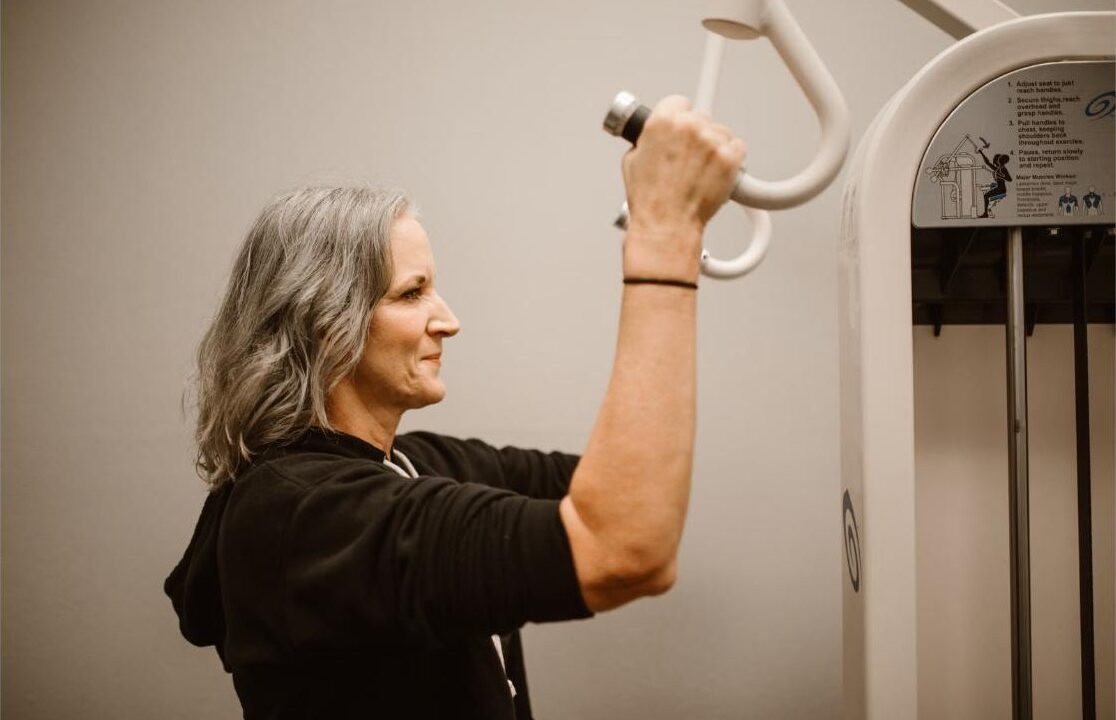
If it feels harder than it used to to carry groceries in one trip, or you’ve noticed your arms and legs look a little less “filled in” than a decade ago, you’re not imagining it. Muscle loss is one of the most consequential — and most fixable — parts of aging, and it starts earlier than most women expect. Here’s what’s actually happening, why it accelerates around menopause, and exactly what the evidence says helps.
In This Article
- What Is Sarcopenia?
- When Does Muscle Loss Start — and How Fast?
- Why Muscle Loss Speeds Up During and After Menopause
- Signs and Symptoms to Watch For
- Why It Matters: The Real Health Risks
- How Sarcopenia Is Diagnosed
- What Actually Helps: Evidence-Based Prevention and Treatment
- Putting It Into Practice: A Simple Starting Plan
- Expert Tips
- Common Mistakes to Avoid
- Frequently Asked Questions
- Key Takeaways
What Is Sarcopenia?
Sarcopenia is the age-related loss of muscle mass, strength, and physical function. The name comes from the Greek for “poverty of flesh,” and that’s a fair description of what’s happening: muscle tissue gradually shrinks and becomes less functional, affecting everything from carrying groceries to climbing stairs to simply standing up from a chair without pushing off with your hands.
Unlike ordinary fatigue, sarcopenia is progressive, and it compounds on itself. Weaker muscles lead to less activity, and less activity accelerates further muscle loss — which is exactly why catching it early, ideally well before your 60s, makes such a difference.
When Does Muscle Loss Start — and How Fast?
Muscle loss doesn’t begin in your 60s or 70s — it starts much earlier than most women expect. According to the Office on Women’s Health, the body begins losing roughly 3 to 5% of muscle mass per decade starting around age 30. That decline becomes more noticeable by age 60, and it doesn’t stay linear: Cleveland Clinic notes the rate of loss can climb as high as 8% per decade in later life, particularly between ages 65 and 80. Somewhere between 10% and 20% of adults 65 and older meet clinical diagnostic criteria for sarcopenia, according to NIH-funded research.
For women, this timeline overlaps directly with perimenopause and menopause — and that overlap isn’t a coincidence.
Why Muscle Loss Speeds Up During and After Menopause
Hormonal change is one of the recognized contributors to sarcopenia, alongside chronic illness, sedentary habits, and poor diet. Declining estrogen during the menopause transition affects muscle protein synthesis and is associated with faster muscle and strength loss during those years. That’s part of why perimenopause and the years just after menopause are such an important window for building — or rebuilding — a strength-training habit, on top of everything else changing hormonally during that transition.
Signs and Symptoms to Watch For

- Noticeable weakness when carrying groceries, lifting objects, or opening jars
- A slower walking pace than you used to have
- Increasing difficulty climbing stairs or standing up from a chair without using your hands
- Balance problems, or a growing fear of falling
- Visible decrease in muscle size, especially in the arms and legs
- General loss of stamina or a persistent feeling of being “unsteady”
Why It Matters: The Real Health Risks
Sarcopenia isn’t just a cosmetic or comfort issue. It measurably increases fall risk, raises the likelihood of hospitalization — people with sarcopenia are nearly twice as likely to be hospitalized, according to NIH-funded research — increases fracture risk, and can make it harder for the body to recover from illness, surgery, or cancer treatment. Over time, unaddressed muscle loss can quietly erode the independence most women are actively trying to protect as they age, which is exactly why it deserves a central place in any healthy-aging plan, not an afterthought.
How Sarcopenia Is Diagnosed
Sarcopenia is a clinical diagnosis, not a guess based on how tired you feel. It typically combines a quick self-screen with objective functional tests, and sometimes imaging to confirm muscle mass.
Self-Assessment: The SARC-F Questionnaire
Many clinicians start with the SARC-F, a five-question screening tool covering strength, walking, rising from a chair, climbing stairs, and falls. It’s not a diagnosis on its own, but a high score is a signal to investigate further.
Functional Tests
Grip strength (measured with a handheld dynamometer), the chair-stand test (how many times you can stand from a seated position in 30 seconds), walking speed, and the timed-up-and-go test are the most common objective measures. Walking speed is a particularly well-studied marker: NIH-funded researchers analyzing data from thousands of older adults found that a walking speed below 2.6 feet per second is a reliable indicator of sarcopenia risk.
Imaging Confirmation
When needed, a DEXA scan or bioelectrical impedance analysis can directly measure muscle mass to confirm a diagnosis and establish a baseline to track over time.
If you recognize several of the symptoms above, the right next step is a conversation with your doctor, not self-diagnosis — most of these tests take only a few minutes in a clinical setting.
What Actually Helps: Evidence-Based Prevention and Treatment
Resistance Training — the Most Effective Intervention
There is currently no FDA-approved medication for sarcopenia, which is a major reason resistance training is considered the primary, evidence-backed intervention. The National Institute on Aging recommends muscle-strengthening activity at least two days per week, working all the major muscle groups, with rest days between sessions targeting the same muscles. One set of 8 to 12 repetitions performed to a moderate-to-hard intensity is effective, though two to three sets may be more beneficial. As Dr. Rosaly Correa-de-Araujo, an NIH-funded sarcopenia researcher, put it: “resistance training is going to help build your strength.” For a full beginner walkthrough, see our guide to strength training after 50.
Protein Intake
Protein needs increase with age, in part because older muscle becomes less efficient at using the protein you eat to build and repair tissue. Guidance varies slightly by source, but a reasonable target is roughly 1.2 grams of protein per 2 pounds of body weight per day, distributed across meals rather than loaded into one. Cleveland Clinic specifically recommends 20 to 35 grams of protein per meal for older adults working to preserve muscle — an amount many women fall well short of at breakfast. For specifics, see our guide to protein needs after 40.
Supplements: What the Evidence Actually Shows
Early research on amino acids, fish oil, vitamin D, selenium, magnesium, and omega-3 fatty acids shows promise for supporting muscle health — but specifically when combined with resistance training and adequate protein, not as a replacement for either. Talk with your doctor before starting any new supplement, particularly if you take other medications.
Putting It Into Practice: A Simple Starting Plan
/image
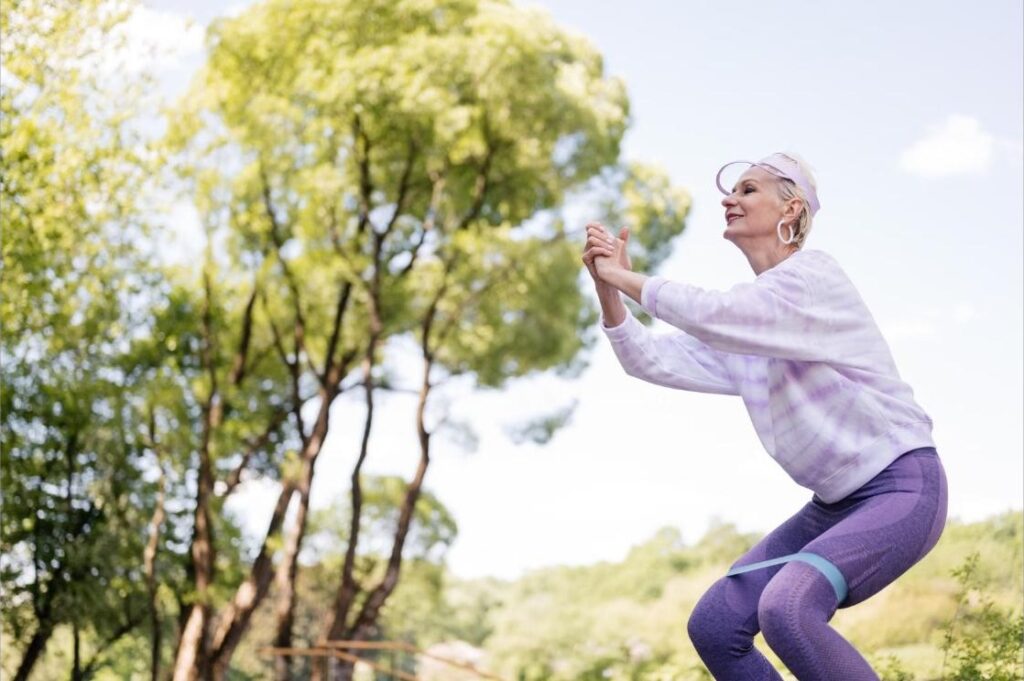
None of this requires a gym membership or hours of free time. A realistic starting plan looks less like an overhaul and more like two or three short, consistent sessions a week that you can actually sustain.
Weeks 1–2: Build the Habit
Two sessions a week, 20–30 minutes each, using bodyweight moves (squats, wall push-ups, glute bridges) or light resistance bands. The goal isn’t intensity yet — it’s showing up twice a week without it becoming a chore.
Weeks 3–6: Add Real Resistance
Introduce dumbbells, a resistance band with more tension, or gym machines if you have access. Aim for the 8–12 rep range described earlier, working to the point where the last couple of reps feel genuinely hard. This is also a good point to add a third weekly session if your schedule allows.
Ongoing: Progress and Reassess
Every 4–6 weeks, increase the weight, resistance, or reps slightly — muscles adapt, and without a bit more challenge over time, progress stalls. This is also a natural checkpoint to revisit the functional markers mentioned earlier: how easily you’re carrying groceries, climbing stairs, or getting up off the floor.
If you’re recovering from an injury, managing a chronic condition, or simply haven’t exercised in years, it’s worth doing this first phase under the guidance of a physical therapist or trainer experienced with older adults — the plan above is a general starting framework, not a substitute for individualized guidance.
Expert Tips
- Prioritize protein at breakfast, not just dinner — most women front-load carbohydrates in the morning and protein at night, which works against muscle preservation.
- Two short strength sessions a week beat zero long ones — consistency matters more than duration when you’re starting out.
- Track function, not just weight lifted: can you get up from the floor without using your hands? Carry both grocery bags in one trip? These are the real markers of progress.
- Don’t skip the warm-up as you age — tendons and connective tissue recover more slowly than muscle does.
- Pair strength training with adequate sleep — muscle repair happens during rest, and poor sleep blunts strength gains.
Common Mistakes to Avoid
- Relying on cardio alone. Walking and cardio are valuable for heart health, but they do not build or preserve muscle mass the way resistance training does.
- Waiting for a diagnosis before acting. By the time sarcopenia is clinically diagnosable, meaningful muscle has often already been lost — prevention starts in your 30s and 40s, not your 60s.
- Under-eating protein while dieting. Aggressive calorie cuts without enough protein accelerate muscle loss even as the scale drops.
- Going too light, too long. Many women plateau because their strength training never progresses in resistance — muscles need a real challenge to adapt.
- Ignoring balance and mobility work. Strength without balance training still leaves you vulnerable to falls.
Frequently Asked Questions
Is sarcopenia just normal aging?
Some muscle loss with age is normal and expected. Sarcopenia refers specifically to muscle loss severe enough to affect strength and daily function — it’s a clinical condition, not simply the passage of time, and it’s influenced heavily by activity level, diet, and hormonal changes, which means it’s also substantially modifiable.
Can muscle loss be reversed?
Yes, to a meaningful degree, especially when addressed early. Resistance training combined with adequate protein intake can rebuild strength and, in many cases, muscle mass at any age, though the response tends to be slower the more advanced the muscle loss.
How much protein do I actually need each day?
General guidance points to roughly 1.2 grams per 2 pounds of body weight per day for women over 40 actively working to preserve muscle, spread across meals at around 20 to 35 grams per meal. See our full protein after 40 guide for specifics based on your goals.
Do I need a doctor’s diagnosis before I start exercising?
No — starting or increasing resistance training is safe and beneficial for most women, even without a formal diagnosis. That said, if you have existing joint issues, heart conditions, or haven’t exercised in years, a conversation with your doctor before starting a new program is a reasonable precaution.
Are creatine or other supplements worth trying?
Creatine has reasonable evidence behind it as an adjunct to resistance training in older adults, and several other supplements show early promise. None of them substitute for resistance training and adequate protein, and you should check with your doctor before adding any supplement, especially alongside other medications.
Key Takeaways
- Muscle loss begins around age 30, at roughly 3 to 5% per decade, accelerating later in life and during the menopause transition.
- Sarcopenia raises the risk of falls, fractures, and hospitalization, and can compromise long-term independence.
- Resistance training at least twice a week is the single most effective, evidence-backed intervention — there’s no approved medication for sarcopenia.
- Adequate protein, distributed across meals, supports the muscle-building effect of training.
- Simple tests — grip strength, walking speed, chair stands — can flag risk early, well before symptoms become obvious.
- It’s never too early, or too late, to start building this into your routine.
This article is educational and does not diagnose or treat any condition. Talk with a qualified healthcare professional before using prescription weight-loss medications, starting supplements, or making major health changes.
Sources
- Office on Women’s Health — Sarcopenia: https://womenshealth.gov/sarcopenia
- National Institute on Aging — Research consortium proposes diagnostic criteria for sarcopenia: https://www.nia.nih.gov/news/research-consortium-including-nih-proposes-diagnostic-criteria-sarcopenia
- NIH News in Health — Slowing Sarcopenia: https://newsinhealth.nih.gov/2025/04/slowing-sarcopenia
- Cleveland Clinic — Sarcopenia (Muscle Loss): https://my.clevelandclinic.org/health/diseases/23167-sarcopenia
- National Institute on Aging — Three Types of Exercise Can Improve Your Health and Physical Ability: https://www.nia.nih.gov/health/exercise-and-physical-activity/three-types-exercise-can-improve-your-health-and-physical
For evidence-aware health trend checks, subscribe to the Best Health Secret newsletter.