
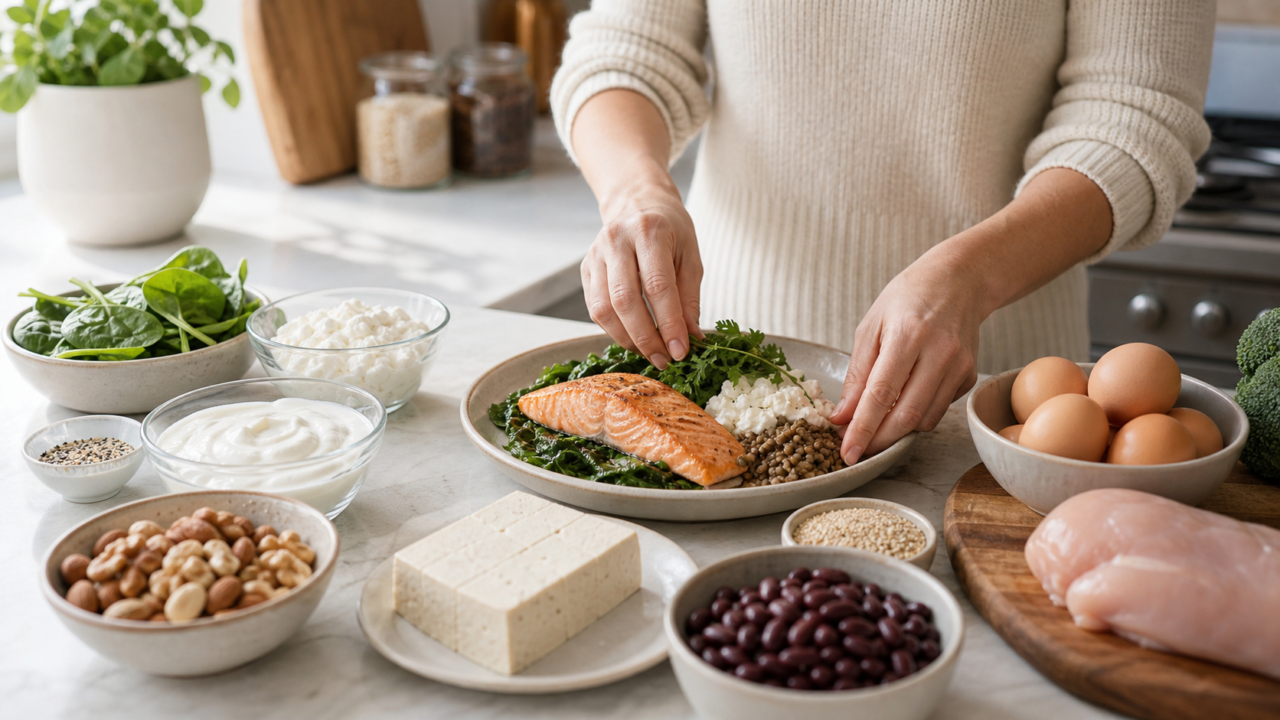
Protein becomes more important after 40 because muscle becomes more important. Not for vanity, not for extreme dieting, and not because everyone needs to chase a bodybuilder meal plan. Protein helps support the muscle tissue you use to climb stairs, carry groceries, exercise, recover, and stay independent as you age.
This article is for general education. Protein needs vary by body size, activity, health history, medications, kidney function, and goals. If you have kidney disease, liver disease, cancer, diabetes, an eating disorder history, or another medical condition, ask a qualified clinician or registered dietitian before making major diet changes.
The short answer
Most adults should think less about one magic protein number and more about a pattern: include a good protein source at most meals, pair it with fiber-rich plant foods, and combine it with strength training. For many people over 40, the biggest upgrade is not a supplement. It is spreading protein more evenly across breakfast, lunch, and dinner.
Why protein matters more with age
Muscle mass and strength tend to decline with age, especially when people become less active. The National Institute on Aging notes that strength training can help older adults maintain muscle mass, improve mobility, and support more healthy years of life. Protein is part of that picture because your body needs amino acids to repair and build muscle tissue.
Protein by itself will not preserve muscle if the rest of the lifestyle is inactive. The stronger formula is protein plus resistance training plus enough total food plus recovery.
Start with meals, not powders
Protein powders can be convenient, but they are not required. A food-first pattern gives you protein along with vitamins, minerals, healthy fats, and fiber depending on the food. Good options include:
- Eggs or egg whites
- Greek yogurt, cottage cheese, milk, or fortified soy milk
- Fish, poultry, lean meats, or seafood
- Tofu, tempeh, edamame, and other soy foods
- Beans, lentils, chickpeas, and split peas
- Nuts, seeds, and nut butters
The National Institute on Aging recommends adding seafood, dairy, fortified soy products, beans, peas, and lentils to meals to help older adults get enough protein throughout the day and maintain muscle.
Spread protein across the day
Many people eat very little protein at breakfast, a moderate amount at lunch, and a large amount at dinner. A steadier approach may be more useful. Try building each meal around a protein anchor:
- Breakfast: Greek yogurt with oats and berries, eggs with vegetables, tofu scramble, or cottage cheese with fruit.
- Lunch: Lentil soup, chicken salad, tuna with whole-grain toast, bean bowl, or tofu and vegetable stir-fry.
- Dinner: Salmon, turkey, beans, tempeh, or lean meat with vegetables and a whole grain.
- Snack: Yogurt, roasted chickpeas, edamame, string cheese, hummus, or nuts.
Do not forget strength training
The CDC recommends adults do muscle-strengthening activities at least two days each week, in addition to aerobic activity. That does not have to mean heavy gym workouts. Bodyweight squats, wall pushups, resistance bands, dumbbells, machines, and supervised classes can all count when they challenge major muscle groups.
Protein gives the body building blocks. Strength training gives the body a reason to use them.
Watch the whole plate
High-protein eating can become unbalanced if it pushes out plants. For long-term health, keep vegetables, fruits, beans, lentils, whole grains, nuts, seeds, and healthy fats in the picture. The current Dietary Guidelines for Americans emphasize whole, nutritious foods while limiting highly processed foods, added sugars, and refined carbohydrates.
A simple plate formula works well: protein, colorful plants, a fiber-rich carbohydrate, and a fat source you enjoy.
When to get personalized advice
Ask a clinician or registered dietitian before increasing protein significantly if you have kidney disease, reduced kidney function, liver disease, gout, complex diabetes management, cancer treatment, swallowing problems, unexplained weight loss, or a history of disordered eating.
Bottom line
After 40, protein is not about chasing a trend. It is about protecting the muscle that helps you live well. Put a protein source at most meals, keep plants on the plate, and pair the habit with strength training two or more days per week.