
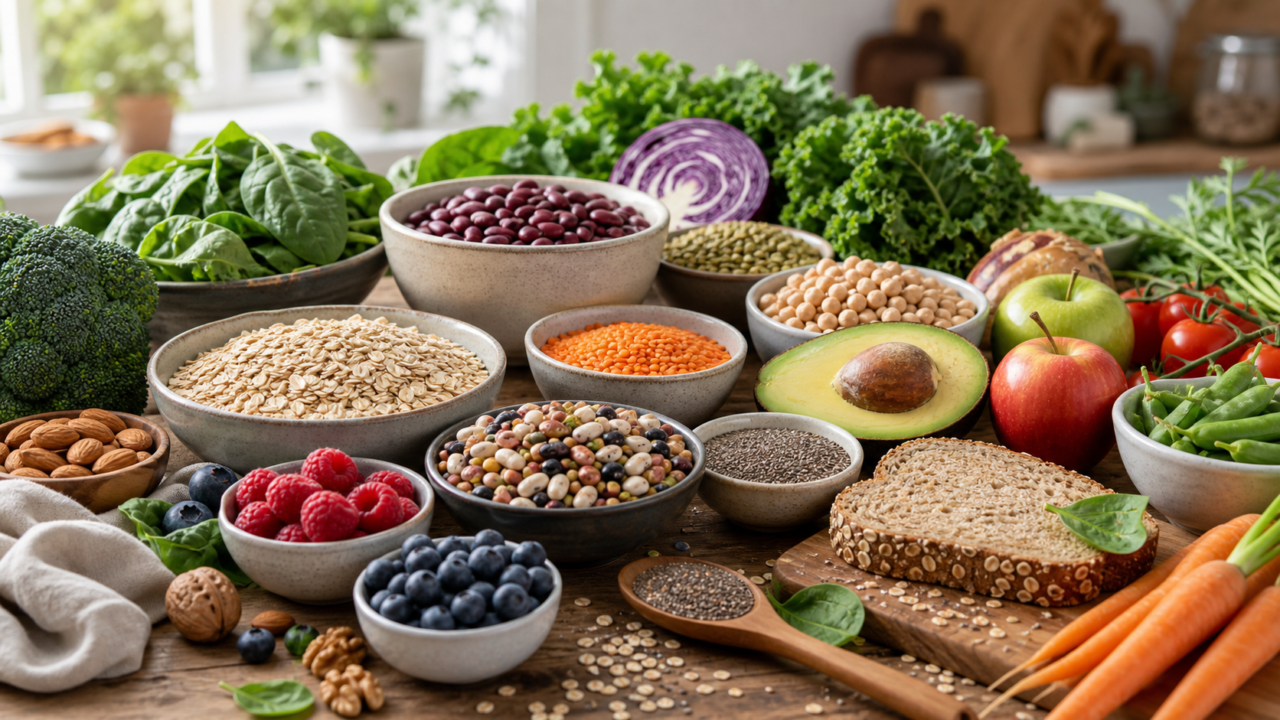
If there is one nutrition habit that deserves more attention, it is fiber. Fiber is not new, flashy, or expensive. It does not need a celebrity routine. It shows up in beans, lentils, oats, berries, vegetables, whole grains, nuts, and seeds, and it supports a healthier eating pattern in ways people can actually feel.
Fiber will not make anyone ageless, and it does not replace medical care. But for everyday healthy living, it is one of the most practical upgrades on the plate.
What fiber is
Fiber is a type of carbohydrate found in plant foods that your body does not fully digest. That is part of why it is useful. Fiber can add bulk, slow digestion, support fullness, and feed beneficial gut microbes depending on the type of fiber and the rest of your diet.
People often talk about soluble and insoluble fiber. Soluble fiber dissolves in water and forms a gel-like texture; oats, beans, lentils, apples, and barley are common sources. Insoluble fiber adds bulk and helps food move through the digestive tract; vegetables, wheat bran, nuts, and many whole grains contain it. Most high-fiber foods contain a mix.
How much fiber do you need?
The FDA Daily Value for dietary fiber is 28 grams per day based on a 2,000-calorie diet. That does not mean everyone needs the exact same amount, but it gives you a useful label-reading target.
On Nutrition Facts labels, the FDA says 5% Daily Value or less is considered low and 20% Daily Value or more is considered high for a nutrient. That means a food with around 6 grams of fiber per serving is generally a high-fiber choice.
Why fiber supports healthy aging
Healthy aging is not about one nutrient. The National Institute on Aging notes that many factors influence healthy aging, including exercise, healthy food choices, sleep, preventive care, and mental health. Fiber fits because fiber-rich foods are often the same foods that help create a better overall eating pattern: vegetables, fruits, whole grains, beans, peas, lentils, nuts, and seeds.
Fiber-rich meals can also help people feel satisfied, which may make it easier to reduce constant grazing on ultra-processed snacks. When fiber comes from whole foods, it brings other nutrients along with it.
Best high-fiber foods to start with
- Beans and lentils: Add to soups, tacos, salads, bowls, or pasta sauce.
- Oats: Use for oatmeal, overnight oats, or homemade granola.
- Berries: Add to yogurt, cereal, smoothies, or salads.
- Vegetables: Aim for one extra vegetable at lunch or dinner.
- Whole grains: Try quinoa, barley, brown rice, whole-wheat bread, or farro.
- Nuts and seeds: Add chia, flax, pumpkin seeds, walnuts, or almonds.
How to add fiber without upsetting your stomach
The most common mistake is adding a lot of fiber all at once. Your gut may object. Start slowly and drink enough water. Add one fiber upgrade per day for a week, then build.
- Week 1: Add fruit or oats at breakfast.
- Week 2: Add beans or lentils to one meal.
- Week 3: Swap one refined grain for a whole grain.
- Week 4: Add vegetables to lunch and dinner.
If you have irritable bowel syndrome, inflammatory bowel disease, a bowel narrowing, recent gastrointestinal surgery, swallowing problems, or a medically restricted diet, ask a clinician or registered dietitian before making big changes.
Easy fiber day
- Breakfast: Oatmeal with berries, chia seeds, and yogurt.
- Lunch: Lentil soup with a side salad.
- Snack: Apple with peanut butter.
- Dinner: Salmon, tofu, or chicken with roasted vegetables and quinoa.
Bottom line
Fiber is not a miracle nutrient, but it is a reliable one. If you want a healthy eating habit that supports fullness, digestion, and long-term dietary quality, start with more plants: beans, lentils, oats, berries, vegetables, whole grains, nuts, and seeds.