

If you’ve ever done everything right for weeks and had the scale barely move, you’ve felt the specific frustration of using an incomplete tool to measure real progress. Weight is one data point — a genuinely useful one in some contexts — but research consistently shows it’s a poor stand-alone marker of health, especially past 40, when body composition changes independent of total weight. Here are the markers with real evidence behind them, and what each one actually tells you that the scale doesn’t.
In This Article
- Why Weight Alone Falls Short
- The Accuracy Hierarchy of Body Composition Measurement
- Waist-to-Hip and Waist-to-Height Ratios
- Grip Strength: A Surprisingly Powerful Marker
- Functional Fitness Markers That Predict Real Outcomes
- Blood Biomarkers Worth Tracking
- Sleep and Energy as Real Signals
- The Psychology of What You Track
- Expert Tips
- Common Mistakes to Avoid
- Frequently Asked Questions
- Key Takeaways
Why Weight Alone Falls Short

NIA states it plainly: older adults at a normal weight can carry more fat and less muscle than someone who weighs slightly more — meaning two people at an identical number on the scale can have meaningfully different health profiles. The CDC makes a related point about BMI specifically: it doesn’t distinguish between fat, muscle, and bone mass, and it doesn’t indicate where in the body fat is carried, which matters enormously for health risk (see our menopause belly fat guide on why fat location matters).
The stakes of this aren’t just theoretical. A pooled analysis of roughly 600,000 people, published in Mayo Clinic Proceedings, found that a large waist circumference was linked to higher mortality risk at every BMI level — including among people whose BMI fell in the “normal” range. Women with a waist circumference of 37 inches or more had about 80% higher mortality risk than women with a waist under 27 inches, independent of their BMI category. The takeaway isn’t that weight is meaningless — it’s that it’s incomplete, and several other markers fill in what it misses.
The Accuracy Hierarchy of Body Composition Measurement
If you want to track body composition specifically rather than just weight, methods vary meaningfully in accuracy. DEXA scans are considered the clinical reference standard, measuring fat, lean mass, and bone density directly. Skinfold calipers, used by a trained tester, come next in accuracy. Bioelectrical impedance devices — including most consumer smart scales — are validated against DEXA in research but show real variability based on hydration status and the specific device used, making them more useful for tracking your own trend over time than for a precise one-time number. Waist circumference alone, while the simplest of all these methods, still carries real predictive value on its own, as the mortality data above shows.
The practical implication: if you don’t have DEXA access, a consistent method — even a simple tape measure used the same way each time — tracked over months is more useful than a single precise-sounding number from a device with known variability.
Waist-to-Hip and Waist-to-Height Ratios
Beyond a simple waist measurement, two ratios have real evidence behind them for predicting risk that BMI misses. NIH guidance sets increased risk at a waist circumference over 35 inches for women. Research using UK Biobank data on nearly 500,000 adults found waist-to-hip ratio predicted heart attack risk better than BMI for both sexes — and notably, women with an “apple-shaped” fat distribution pattern had about 15% higher heart attack risk than men with an equivalent waist-to-hip ratio. The lead researcher’s explanation is worth repeating: fat around the waist is more metabolically active and more closely tied to insulin resistance than fat carried elsewhere, while BMI doesn’t distinguish between where fat is actually stored.
Grip Strength: A Surprisingly Powerful Marker
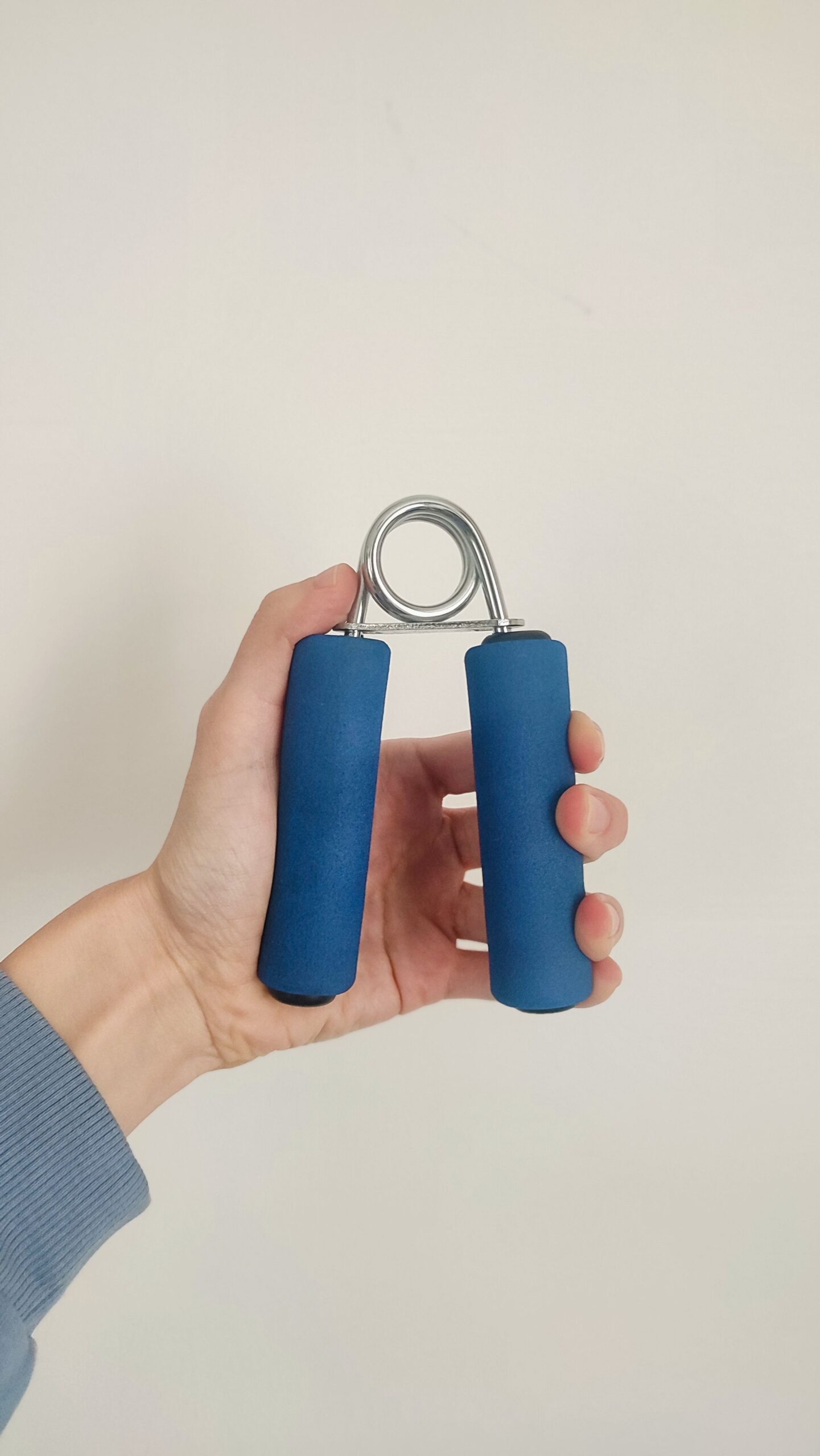
This is one of the more striking findings in aging research, and it’s genuinely underused as a personal health marker. The PURE study, following nearly 140,000 adults across 17 countries, found that every 5-kilogram decrease in grip strength was associated with a 16% higher risk of all-cause mortality, 17% higher cardiovascular mortality, and increased risk of heart attack and stroke. Grip strength turned out to be an even stronger predictor of death in this research than systolic blood pressure — a genuinely striking result for a measurement that takes about ten seconds with an inexpensive hand dynamometer.
A separate analysis of NHANES data found a similar pattern specifically in women: each 5-kilogram decrease in grip strength was associated with roughly 49% higher mortality risk, and women in the lowest grip-strength group had more than double the mortality risk of those in the normal range. This isn’t a marker of arm strength for its own sake — it’s a proxy for overall muscle health and functional reserve, both of which connect directly to the muscle-loss factors covered in our weight gain after 40 guide.
Functional Fitness Markers That Predict Real Outcomes
Beyond grip strength, several simple functional tests carry real predictive research behind them.
Walking speed (gait speed) was studied in a pooled analysis of over 34,000 older adults across nine cohort studies: every 0.1 meter-per-second increase in usual walking speed was associated with meaningfully better survival odds, and the relationship held consistently across the studies.
The sitting-rising test — how well you can lower yourself to the floor and rise again, scored out of 10 based on how much support you need — was studied in over 2,000 adults followed for more than six years. Each additional point on the test was associated with roughly 21% better survival, and the lowest-scoring group had more than five times the mortality risk of the highest scorers.
Cardiorespiratory fitness (VO2 max), tracked over 46 years in a large cohort of Danish men, found the highest-fitness group lived nearly five years longer on average than the lowest-fitness group — a dose-dependent relationship where more fitness meant more years, without a clear ceiling. (This particular study was male-only; the general relationship between cardiorespiratory fitness and longevity is well-supported across the broader research base, even where this specific dataset doesn’t include women.)
Blood Biomarkers Worth Tracking
For anyone making diet or exercise changes, blood markers often shift favorably well before — or even without — significant weight change. A large meta-analysis covering more than 7,000 participants across 100 randomized trials found that combined exercise training reduced HbA1c (a marker of average blood sugar) by a clinically meaningful margin, alongside measurable improvements in fasting glucose, blood pressure, and LDL cholesterol — improvements driven by the exercise itself, not necessarily by weight loss.
This matters practically: a controlled study of adults in a calorie deficit with resistance training found that a higher-protein group actually gained 1.2 kg of lean mass while losing 4.8 kg of fat over four weeks — a body composition improvement the scale alone would have shown as unremarkable, since fat loss and muscle gain partially offset each other in total weight.
Sleep and Energy as Real Signals
Subjective markers like sleep quality and daytime energy aren’t just “soft” measures — they can reflect underlying metabolic changes before weight does. The same NIH-funded trial referenced in our weight gain after 40 guide found that restricting sleep increased insulin resistance meaningfully, independent of any weight change — meaning better sleep, and the energy that comes with it, can be a genuine signal of metabolic improvement even when the scale hasn’t moved.
The Psychology of What You Track
There’s a real, if less definitively settled, body of research on how tracking method affects psychological wellbeing. A review of self-weighing research found that, across multiple studies, frequent self-weighing was more often associated with negative outcomes for self-esteem, body image, and eating-related thoughts — particularly among women — while more neutral or positive outcomes showed up mainly in structured, treatment-seeking contexts. The evidence here is more observational than the mortality data above, but it’s a reasonable basis for choosing markers that don’t come with the same psychological weight (no pun intended) that daily scale-watching often carries for many people.
Expert Tips
- Pick one or two non-scale markers to track consistently, rather than trying to monitor everything at once. A waist measurement and a grip-strength check, done monthly, tell you more than daily scale weigh-ins.
- Test your sitting-rising score once as a baseline. It takes thirty seconds and gives you a functional marker with real mortality data behind it.
- Ask your doctor to track blood markers alongside any diet or exercise change — HbA1c, fasting glucose, and blood pressure often move before the scale does.
- Notice your energy and sleep quality as real data, not just comfort — they can reflect metabolic improvements that predate visible weight change.
- If frequent self-weighing feels discouraging, that’s a legitimate reason to weigh less often, not a personal failing — the research supports that instinct for many people.
Common Mistakes to Avoid
- Treating scale weight as the only valid measure of progress. Multiple markers — waist circumference, grip strength, functional tests, blood work — each capture something weight alone misses.
- Assuming a consumer body-fat scale gives you a precise number. These devices are more useful for tracking your own trend over time than for a single accurate reading.
- Ignoring grip strength as “just arm strength.” The research treats it as a proxy for overall muscle health and mortality risk, not an isolated measure.
- Discounting improved sleep or energy because the scale hasn’t changed. Metabolic improvements, like better insulin sensitivity, can precede visible weight change.
- Weighing yourself daily if it consistently affects your mood or eating patterns. The research on self-weighing frequency suggests this is worth changing, not pushing through.
Frequently Asked Questions
Is BMI actually a poor health measure?
It’s an incomplete one. CDC itself notes BMI can’t distinguish fat from muscle or bone, and can’t show where fat is stored — both of which matter for actual health risk. It remains a reasonable population-level screening tool, just not a precise individual health marker on its own.
What’s the single most useful non-scale marker to start with?
Waist circumference is the simplest to measure consistently and has strong mortality-risk evidence behind it, including among people at a “normal” BMI. Grip strength is a close second and takes about as long to check.
How often should I track these markers?
Monthly is reasonable for most of them — waist circumference, grip strength, functional tests like the sitting-rising test. Blood markers are typically checked at whatever interval your doctor recommends based on your individual health picture.
Should I stop weighing myself entirely?
Not necessarily — weight remains a useful data point for many people. But if frequent weighing negatively affects your mood, self-image, or eating patterns, research supports reducing the frequency or shifting focus to other markers, rather than treating daily weigh-ins as mandatory for tracking progress.
Can my weight stay the same while my health genuinely improves?
Yes, and this is common, especially with resistance training. Building muscle while losing fat can leave total weight roughly unchanged while body composition, blood markers, and functional fitness all improve — which is exactly why the non-scale markers in this article matter.
Key Takeaways
- Weight and BMI alone are incomplete health measures — they can’t distinguish muscle from fat or show where fat is stored, both of which affect real health risk.
- Waist circumference over 35 inches for women is linked to significantly higher mortality risk, independent of BMI category.
- Grip strength is a remarkably strong predictor of mortality and functional decline — in one large study, a stronger predictor than blood pressure.
- Functional tests like walking speed and the sitting-rising test carry real, quantified links to long-term survival.
- Blood markers like HbA1c, fasting glucose, and blood pressure often improve with exercise independent of weight change.
- Frequent self-weighing is associated with more negative psychological outcomes in research, particularly for women — a reasonable basis for tracking other markers instead.
This article is educational and does not diagnose or treat any condition. Talk with a qualified healthcare professional before using prescription weight-loss medications, starting supplements, or making major health changes.
Sources
- National Institute on Aging — Maintaining a Healthy Weight
- CDC — About Body Mass Index
- Mayo Clinic News Network — Large Waist Linked to Poor Health Even Among Those in Healthy BMI Ranges
- CDC Preventing Chronic Disease — Abdominal Obesity Indices and Cardiovascular Disease Prediction
- NHLBI/NIH — Healthy Weight, Waist Circumference Guidance
- American Heart Association — Waist Size Predicts Heart Attacks Better Than BMI, Especially in Women
- The Lancet — PURE Study, Grip Strength and Mortality62000-6/abstract)
- Scientific Reports — NHANES Grip Strength and Mortality Analysis
- JAMA — Gait Speed and Survival in Older Adults, Pooled Analysis
- Sitting-Rising Test and Mortality, European Journal of Preventive Cardiology
- JACC — Copenhagen Male Study, Cardiorespiratory Fitness and Life Expectancy
- Cardiovascular Diabetology — Exercise Training and Glycemic/Cardiometabolic Markers Meta-Analysis
- Current Obesity Reports — Self-Weighing: Helpful or Harmful for Psychological Well-Being?
For evidence-aware health trend checks, subscribe to the Best Health Secret newsletter.