
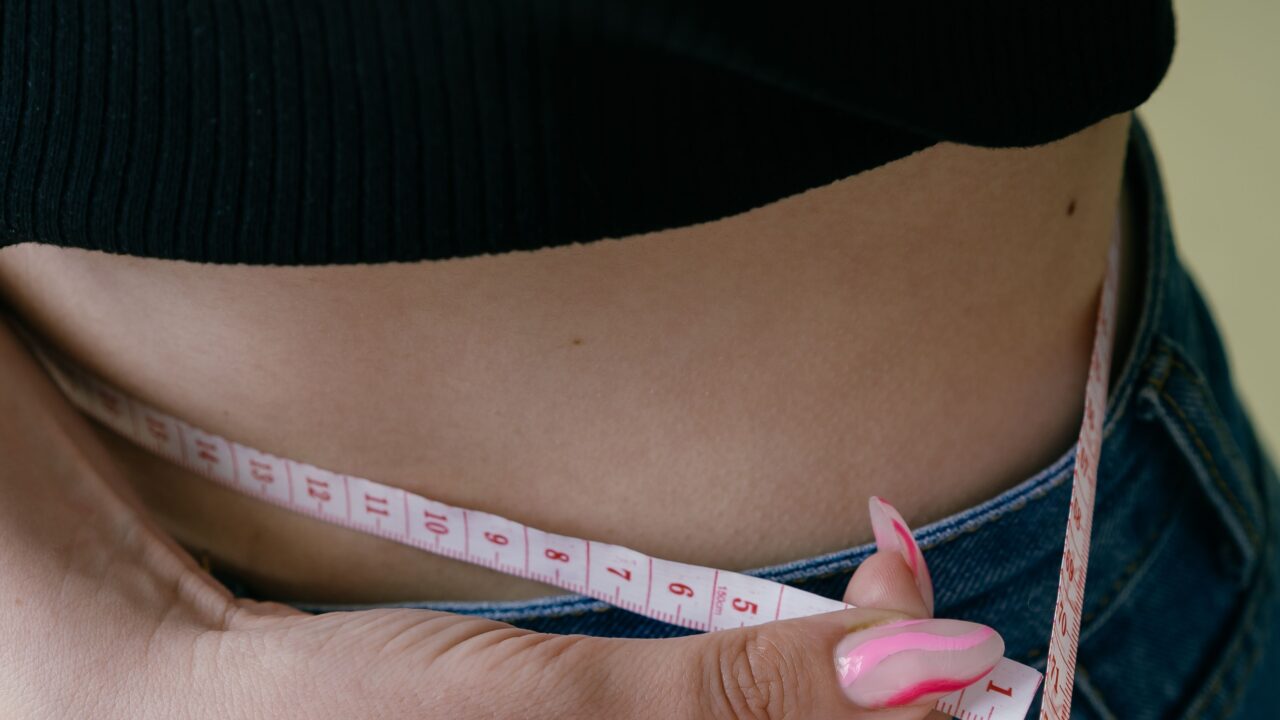
If your waistline has changed shape during perimenopause or menopause — even without the scale moving much — you are noticing something real, and it is not the same story as “menopause slows your metabolism.” Our metabolism after 40 guide covers why that particular claim doesn’t hold up in the largest available research. This is a different, more specific finding: menopause appears to redirect where fat is stored, toward the abdomen, even when total metabolic rate doesn’t change. Here is the actual mechanism, why it matters for health beyond appearance, and what the evidence supports for addressing it.
In This Article
- The Estrogen-Visceral Fat Mechanism
- Why Visceral Fat Carries More Health Risk
- The Waist Circumference Number Worth Knowing
- Does Hormone Therapy Help?
- What Actually Reduces Visceral Fat
- Diet Patterns That Matter
- The Sleep Connection
- Myths Worth Retiring
- Expert Tips
- Common Mistakes to Avoid
- Frequently Asked Questions
- Key Takeaways
The Estrogen-Visceral Fat Mechanism
Before menopause, fat storage in women tends to follow a “gynoid” pattern — hips and thighs. As estrogen declines through the menopause transition, that pattern shifts toward an “android” pattern — the abdomen. This isn’t a subjective impression; it shows up consistently in body-composition research, with postmenopausal women showing measurably greater intra-abdominal fat than premenopausal women, and a significant increase in visceral fat specifically tracked across the menopause transition.
The mechanism, per the International Menopause Society, traces to estrogen’s role in regulating where circulating lipids get taken up and stored — declining estrogen appears to change fat cell behavior toward accumulating around abdominal organs rather than synthesizing more fat overall. Estrogen also interacts with appetite-regulating brain pathways, which may play a supporting role. The key distinction from the metabolism conversation: this is about fat redistribution, not necessarily fat total amount or a slower metabolic rate — you can gain none, some, or the same amount of weight through menopause and still experience this shift in where it settles.
Why Visceral Fat Carries More Health Risk
Visceral fat — the fat surrounding abdominal organs, as opposed to subcutaneous fat just under the skin — behaves differently in the body, and that difference matters for health.
Visceral fat functions as an active endocrine organ. It produces higher levels of inflammatory proteins called cytokines, contributing to low-level chronic inflammation. It also produces a precursor to angiotensin, a hormone involved in raising blood pressure. Research published in the American Heart Association’s journal Circulation confirms that visceral fat independently predicts cardiovascular disease risk beyond what body mass index alone would suggest. The same fat depot is linked to higher blood sugar and triglycerides and lower HDL (“good”) cholesterol — the cluster of changes that defines metabolic syndrome.
This is why two women at an identical body weight, or even an identical BMI, can carry meaningfully different health risk depending on how much of that weight is visceral versus subcutaneous fat.
The Waist Circumference Number Worth Knowing
Because visceral fat specifically (not just overall weight) drives much of this risk, waist circumference is a more direct practical marker than the scale or BMI. NIH clinical guidelines set the increased-risk threshold for women at a waist circumference greater than 35 inches (88 cm) — a number confirmed consistently across NIH, Harvard Health, and Cleveland Clinic guidance. This isn’t a cosmetic cutoff; it’s the point at which population research shows disease risk climbing independent of overall weight.
If you don’t know your number, it’s a simple, free measurement: a tape measure around the narrowest point of your waist, typically just above the belly button, taken after a normal exhale.
Does Hormone Therapy Help?
This is a common question, and the evidence supports a modest, specific answer rather than a dramatic one.
The North American Menopause Society’s 2022 position statement addresses this directly: hormone therapy may help attenuate abdominal fat accumulation and weight gain associated with the menopause transition, but the effect is small, and the evidence is graded as limited and inconsistent (Level II). NAMS is explicit that hormone therapy is not a weight-loss drug and does not carry that indication.
A supporting study from the OsteoLaus cohort, following just over a thousand postmenopausal women, found current hormone therapy users had measurably lower visceral fat than women who had never used it, and — notably — while never-users’ visceral fat continued rising over a 10-year follow-up, current users’ visceral fat stayed roughly flat. Past users who had since stopped showed no lingering benefit, suggesting any protective effect requires ongoing use. The honest summary: hormone therapy may slow abdominal fat accumulation somewhat while you’re using it, which is worth knowing as one factor in a hormone therapy conversation with your doctor, but it is not a treatment prescribed for this purpose on its own.
What Actually Reduces Visceral Fat
Not all exercise affects visceral fat equally, and the research here is more specific than generic “get more active” advice.
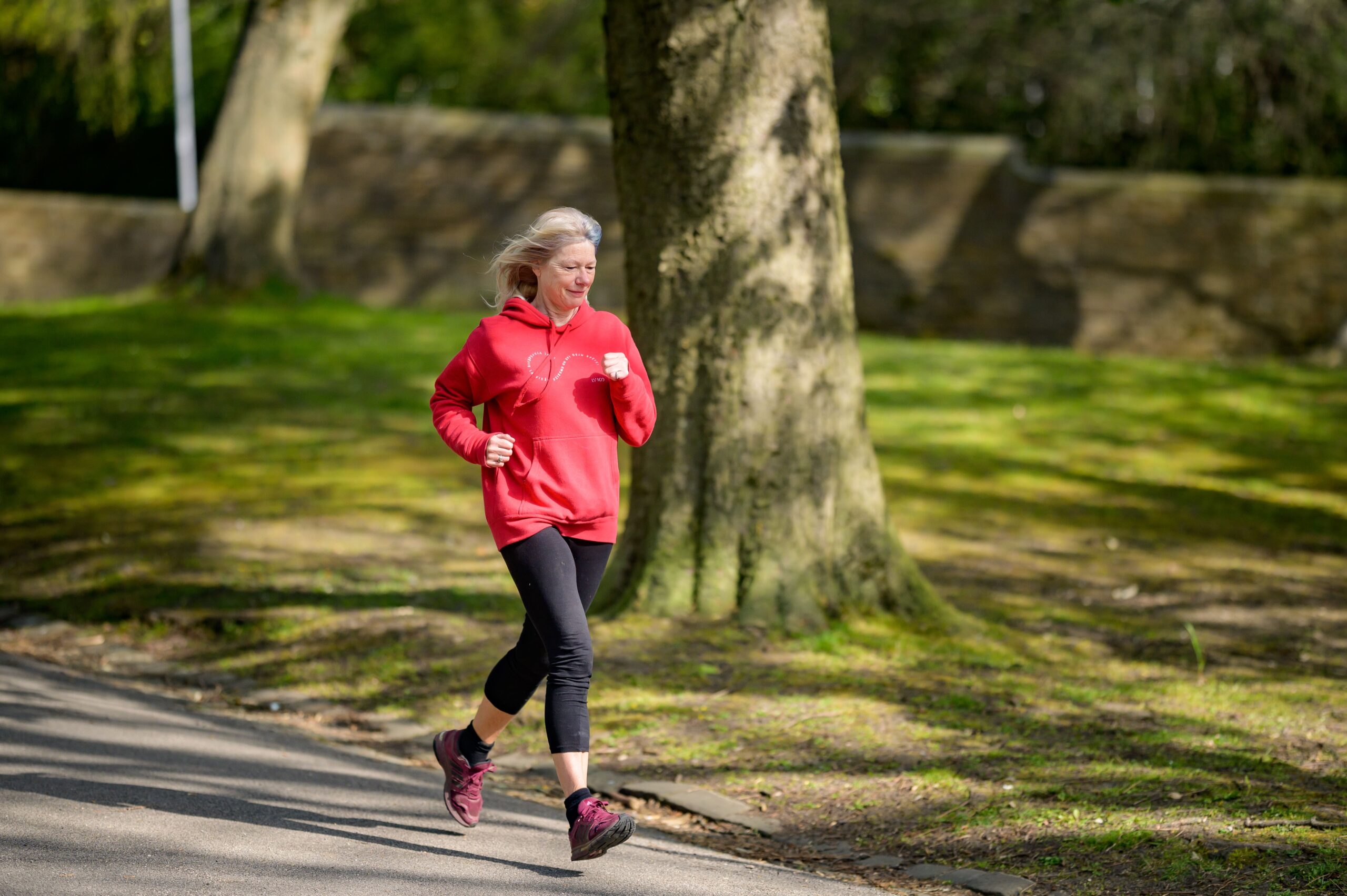
A systematic review and meta-analysis found aerobic exercise produced a statistically significant reduction in visceral fat, while resistance training alone did not show a significant effect on visceral fat specifically (even though resistance training carries its own well-established benefits for muscle mass, bone density, and function — see our strength training after 50 guide). The direct comparison between the two approaches trended toward favoring aerobic exercise, though it didn’t reach statistical significance across the studies reviewed. The practical takeaway: if visceral fat reduction specifically is a goal, aerobic activity has the stronger evidence base, ideally alongside — not instead of — resistance training for the other benefits it provides.
Diet Patterns That Matter
Two specific dietary factors have real evidence behind them for visceral fat specifically, beyond general “eat well” advice.
Sugar-sweetened beverages showed a clear, dose-dependent relationship with visceral fat in Framingham Heart Study data: over a six-year follow-up, visceral fat volume was measurably higher among daily sugar-sweetened beverage drinkers compared with non-drinkers, independent of age, sex, activity level, and overall BMI. Notably, diet soda showed no such association — the effect appears tied to sugar and fructose specifically, not sweeteners in general.
Alcohol has a directional association with higher visceral fat and altered hormone levels in some research, though the specific numbers are less robustly established than the sugar-beverage findings — treat the general direction (moderate-to-higher alcohol intake associated with more visceral fat) as a reasonable takeaway without over-indexing on any single precise statistic.
The Sleep Connection
This is one of the better-established, more surprising findings in this whole topic. A controlled Mayo Clinic study, funded by the NIH’s heart institute, put healthy adults through alternating two-week blocks of restricted sleep (4 hours a night) and adequate sleep (9 hours a night), with abdominal fat measured by CT scan. During the sleep-restricted phase, total abdominal fat rose about 9% and visceral fat specifically rose about 11% — despite only about one pound of total weight gain. In other words, the visceral fat shift was essentially invisible on a bathroom scale. Participants also ate more than 300 additional calories per day during sleep restriction. Notably, a period of recovery sleep afterward did not reverse the visceral fat gain, suggesting this isn’t a fully self-correcting, short-term effect.
The mechanistic link to cortisol is well-established at a biological level — visceral fat cells have a higher density of cortisol receptors than subcutaneous fat, per Cleveland Clinic — though the direct chain from chronic stress specifically to visceral fat in menopausal women hasn’t been tested as rigorously as the sleep-restriction data above. Given how common sleep disruption is during perimenopause, this connection is worth taking seriously; see our sleep after 50 guide for practical steps.
Myths Worth Retiring
Spot reduction doesn’t work. Fat is mobilized from storage throughout the body via the bloodstream, not selectively from wherever you’re exercising. A meta-analysis of more than a dozen studies and over 1,100 participants found localized muscle training had no effect on localized fat deposits — ab exercises don’t preferentially burn abdominal fat.
No specific food “targets” belly fat. There is no credible clinical trial evidence for any specific food, herbal supplement, or “fat-burning” product producing meaningful, clinically significant fat loss — a review of more than 120 placebo-controlled supplement trials found none delivered it. Genetics play a substantial role in where your body stores and releases fat first, which no specific food can override.
Expert Tips
- Measure your waist, not just your weight. It’s a more direct signal of the specific risk this article covers than the number on the scale.
- Prioritize aerobic activity if visceral fat is your specific concern, while keeping resistance training in your routine for its separate, well-established benefits.
- Treat sleep as a body-composition variable, not just a comfort issue. The visceral fat effect of poor sleep showed up before any meaningful scale-weight change.
- Bring up hormone therapy as one factor among several, not a stand-alone weight or fat-distribution solution — NAMS is explicit that its effect here is real but small.
- Be skeptical of anything promising to “target” belly fat specifically through a single food, drink, or supplement — the evidence doesn’t support spot-targeted fat loss of any kind.
Common Mistakes to Avoid
- Assuming a stable scale weight means nothing is changing. Fat redistribution toward the abdomen can happen with little or no total weight change, which is exactly why waist circumference matters as a separate measurement.
- Skipping resistance training because it doesn’t specifically target visceral fat. It remains essential for muscle and bone health — the point is adding aerobic activity, not replacing strength work.
- Expecting hormone therapy to function as a weight-loss treatment. NAMS explicitly does not classify it as one; any effect on abdominal fat is real but modest.
- Chasing “belly fat” supplements or diet trends not supported by trial evidence — spot reduction isn’t physiologically possible, regardless of the product.
- Underestimating sleep’s role because the scale hasn’t moved. The Mayo Clinic sleep-restriction data found significant visceral fat increases with barely any total weight change.
Frequently Asked Questions
Is menopause belly fat caused by a slower metabolism?
Not primarily. The largest life-course studies of human energy expenditure found no independent metabolic slowdown from menopause itself (see our metabolism after 40 guide). What changes is where fat is stored — shifting toward the abdomen — driven by declining estrogen’s effect on fat cell behavior, not necessarily a change in total calories burned.
What waist measurement should I be concerned about?
NIH guidelines set the increased-risk threshold for women at a waist circumference greater than 35 inches (88 cm). This is a more direct marker of visceral fat-related health risk than weight or BMI alone.
Should I ask about hormone therapy specifically for belly fat?
Hormone therapy may modestly slow abdominal fat accumulation while you’re using it, per NAMS’s own position statement, but it isn’t classified or prescribed as a weight-loss or fat-reduction treatment. It’s reasonable to mention as one consideration in a broader hormone therapy conversation with your doctor, not to seek out specifically for this purpose.
Does cardio or strength training work better for belly fat?
Research specifically on visceral fat found aerobic exercise produced significant reductions, while resistance training alone did not show a significant effect on visceral fat specifically. Both remain valuable for different reasons — the practical takeaway is to include aerobic activity if visceral fat reduction is a specific goal.
Can I target belly fat with specific exercises or foods?
No. Spot reduction isn’t physiologically possible — fat is mobilized from throughout the body, not from wherever you’re exercising. No specific food or supplement has clinical trial evidence supporting targeted belly fat loss.
Key Takeaways
- Menopause redirects fat storage toward the abdomen through declining estrogen’s effect on fat cell behavior — a separate finding from whether metabolism itself slows down.
- Visceral fat carries more health risk than subcutaneous fat because it functions as an active, inflammation-producing endocrine organ linked to blood pressure, blood sugar, and cholesterol changes.
- A waist circumference over 35 inches (88 cm) is the NIH-defined increased-risk threshold for women, independent of overall weight or BMI.
- Hormone therapy may modestly slow abdominal fat accumulation while in use, per NAMS, but is not classified as a weight-loss treatment.
- Aerobic exercise has stronger evidence for reducing visceral fat specifically than resistance training alone, though both remain valuable for different reasons.
- Poor sleep measurably increases visceral fat even with minimal total weight change, based on controlled research.
- Spot reduction and belly-fat-targeting foods or supplements are not supported by evidence — genetics and the factors above, not localized effort, determine where fat is stored and lost.
This article is educational and does not diagnose or treat any condition. Talk with a qualified healthcare professional before using prescription weight-loss medications, starting supplements, or making major health changes.
Sources
- International Menopause Society — Understanding Weight Gain at Menopause
- Scientific Reports — Subcutaneous Adipose Tissue Phenotype Changes Post-Menopause
- Harvard Health — Taking Aim at Belly Fat
- Circulation (AHA) — Body Fat Distribution and Risk of Cardiovascular Disease
- Cleveland Clinic — Visceral Fat
- NHLBI/NIH — Clinical Guidelines on Overweight and Obesity, Waist Circumference Table
- NAMS — 2022 Hormone Therapy Position Statement
- JCEM — OsteoLaus Cohort, Hormone Therapy and Visceral Fat
- NCBI — Aerobic vs. Resistance Exercise for Visceral Fat, Systematic Review
- ScienceDaily — Framingham Heart Study, Sugar-Sweetened Beverages and Visceral Fat
- Mayo Clinic News Network — Lack of Sleep Increases Unhealthy Abdominal Fat
- University of Sydney — Spot Reduction: Why Targeting Weight Loss to a Specific Area Doesn’t Work
For evidence-aware health trend checks, subscribe to the Best Health Secret newsletter.