

Introduction
If you’ve spent any time in women’s fitness spaces, you’ve heard the pitch: lifting weights is the secret to losing fat after 50. Build muscle, torch calories, watch the fat melt away. It’s a compelling story, and parts of it are genuinely backed by research. But the full picture is more nuanced than most headlines suggest — and the nuance matters if you’re deciding where to put your limited time and energy.
Strength training is one of the most evidence-supported things a woman over 50 can do for her long-term health. It preserves muscle mass that would otherwise decline with age, protects bone density, and supports metabolic health. What it does less reliably, according to the research, is directly melt fat off your body when used alone. Understanding which claims are well-supported and which are oversold will help you build a realistic, sustainable exercise plan instead of chasing a promise the evidence doesn’t fully back.
In This Article
- Why muscle matters for metabolism
- What happens to muscle mass after 50
- What the research actually shows about strength training and fat loss
- Strength training vs. aerobic vs. combined training
- How much strength training you actually need
- The “bulky” myth, debunked
- A bone health bonus worth mentioning
- Expert tips
- Common mistakes
- FAQs
Why Muscle Matters for Metabolism
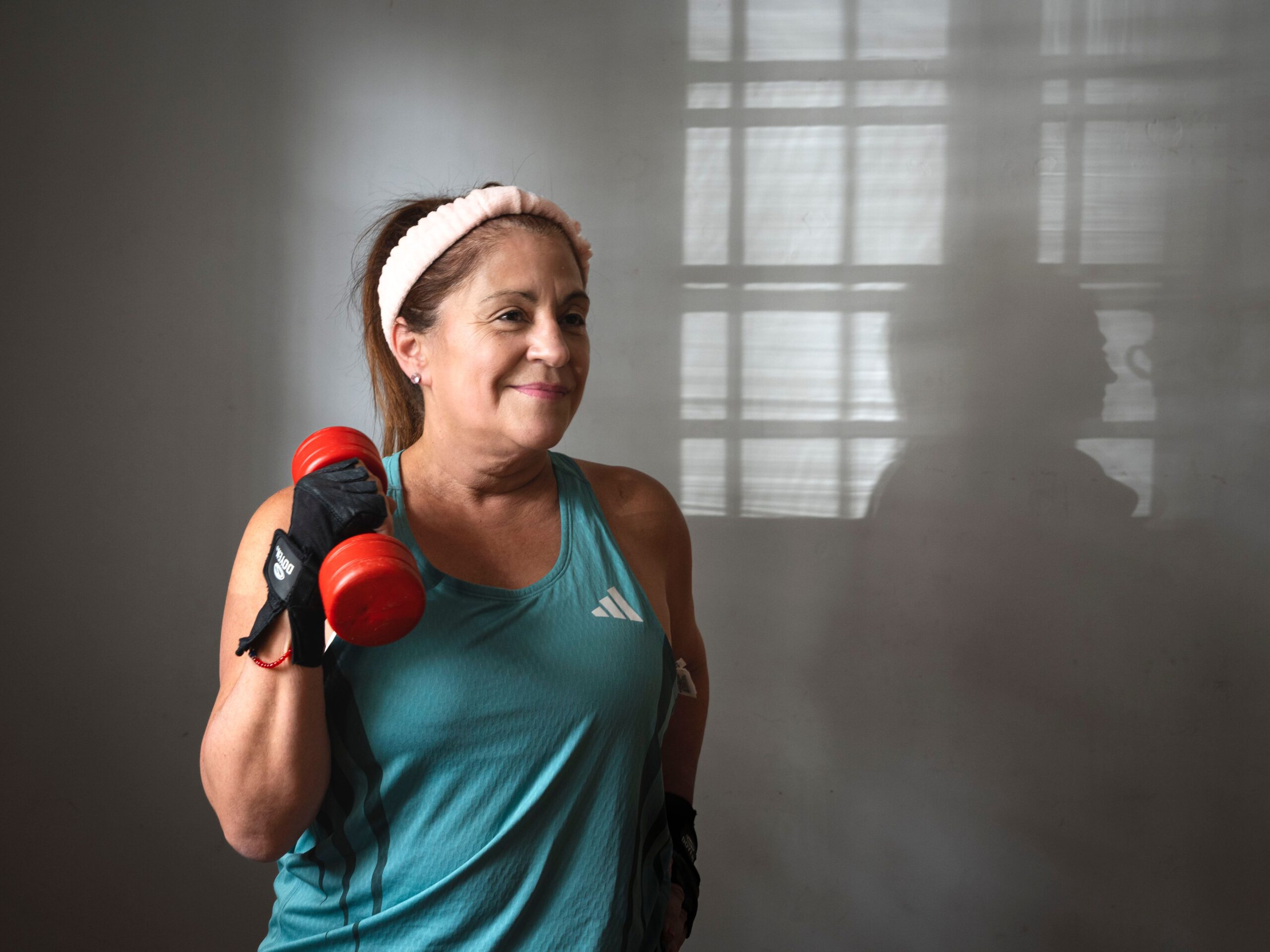
Muscle tissue is more metabolically active than fat tissue, which is the physiological basis for the “more muscle, more calories burned” argument. Research measuring the specific metabolic rate of different tissues found that skeletal muscle burns roughly 12.6 kcal per kilogram per day at rest, compared to about 4.4 kcal per kilogram per day for fat tissue — roughly three times more active, though far less dramatic than the popular claim that “a pound of muscle burns 50 calories a day” (Wang et al., American Journal of Clinical Nutrition).
In practical terms, this means gaining a few pounds of muscle will nudge your resting metabolic rate upward, but it’s a modest effect, not a metabolic overhaul. The Mayo Clinic notes that as muscle mass increases, “the body becomes more metabolically active,” and Harvard Health points to research showing that adults who did regular strength training gained less abdominal fat over time than those doing an equivalent amount of aerobic exercise. That specific diabetes-risk figure sometimes cited alongside it, however, comes from observational cohort data — it shows an association, not proof that strength training alone causes the reduced risk.
There’s also the “afterburn effect,” or excess post-exercise oxygen consumption (EPOC): your body continues burning slightly more calories after a workout as it recovers. Estimates suggest this can raise total calorie burn by roughly 6–15% in the hours following a session, though the exact size and duration depend heavily on workout intensity — high-intensity resistance training tends to produce more afterburn than light aerobic activity. Useful, but it’s a modest bonus, not a metabolic reset.
What Happens to Muscle Mass After 50
Muscle loss is a normal, gradual part of aging — it doesn’t switch on abruptly at menopause. The National Institute on Aging notes that muscle mass and strength peak around age 30–35, decline slowly at first, then accelerate more noticeably after age 65 in women. Separately, NIH resources cite an average loss of roughly 3–5% of muscle mass per decade starting around age 30, while the Menopause Society (NAMS) cites a slightly wider range of 3–8% per decade after 30 — different studies, different populations, roughly the same message: it’s a gradual erosion that compounds over decades, not a menopause light-switch.
Hormonal changes around menopause do appear to play a contributing role. NAMS has noted that declining estrogen is associated with increased visceral fat and decreased bone density, muscle mass, and strength, and recommends that midlife women prioritize both resistance training and adequate protein intake to help guard against frailty later in life. This is one of the strongest, most consistent reasons to strength train after 50 — not primarily for fat loss, but to protect the muscle and strength you’ll rely on for decades to come.
What the Research Actually Shows About Strength Training and Fat Loss
Here’s where it’s worth slowing down, because this is the part most fitness content oversimplifies.
A 2023 systematic review and meta-analysis in Frontiers in Endocrinology pooled 101 randomized controlled trials covering 5,697 postmenopausal women — a substantial body of evidence. Across all exercise types combined, participants lost an average of 1.27 kg of fat mass and gained 0.66 kg of fat-free (lean) mass. But when the researchers broke results down by exercise type, a clear pattern emerged:
- Aerobic training produced the largest fat mass reduction (−1.94 kg) and the only significant reduction in waist circumference.
- Resistance training alone produced the largest lean mass gain (+0.90 kg) but its effect on fat mass was smaller and not statistically significant (−0.45 kg).
- Combined aerobic + resistance training offered a middle ground, with meaningful benefits for both fat loss and muscle preservation.
The study authors’ own conclusion: aerobic training is more effective for fat loss, resistance training is more effective for building and preserving muscle, and a combination is the best strategy if your goal includes both.
A smaller 20-week controlled trial published in BMC Women’s Health adds an important real-world nuance. Premenopausal women in the study saw significant gains in muscle mass and reductions in fat mass from resistance training. But the postmenopausal women in the same study — across both moderate- and low-intensity resistance groups — showed no significant change in fat-free mass, muscle mass, or fat mass over the same 20 weeks, even though nothing about their weight or BMI changed either. That doesn’t mean resistance training doesn’t work for postmenopausal women; it may mean it takes longer, or a higher training volume, to see the same recomposition response that comes more readily before menopause.
A separate meta-analysis of 43 effects across 745 women aged 50–80 found a modest increase in lean body mass but no statistically significant fat mass reduction from resistance training — worth noting, though the authors flagged that only 3 of the 26 underlying studies were true randomized trials, so this evidence is weaker than the larger 2023 review above.
The honest summary: if fat loss specifically is your primary goal, the research points to aerobic exercise (or a combination) as the more reliably effective tool. If your goal is preserving or building muscle, protecting strength, and supporting bone density as you age — resistance training is where the evidence is strongest and most consistent. Both are valuable. They’re just not interchangeable, and it’s worth being honest about which one does what.
Strength Training vs. Aerobic vs. Combined Training: The Numbers Side by Side
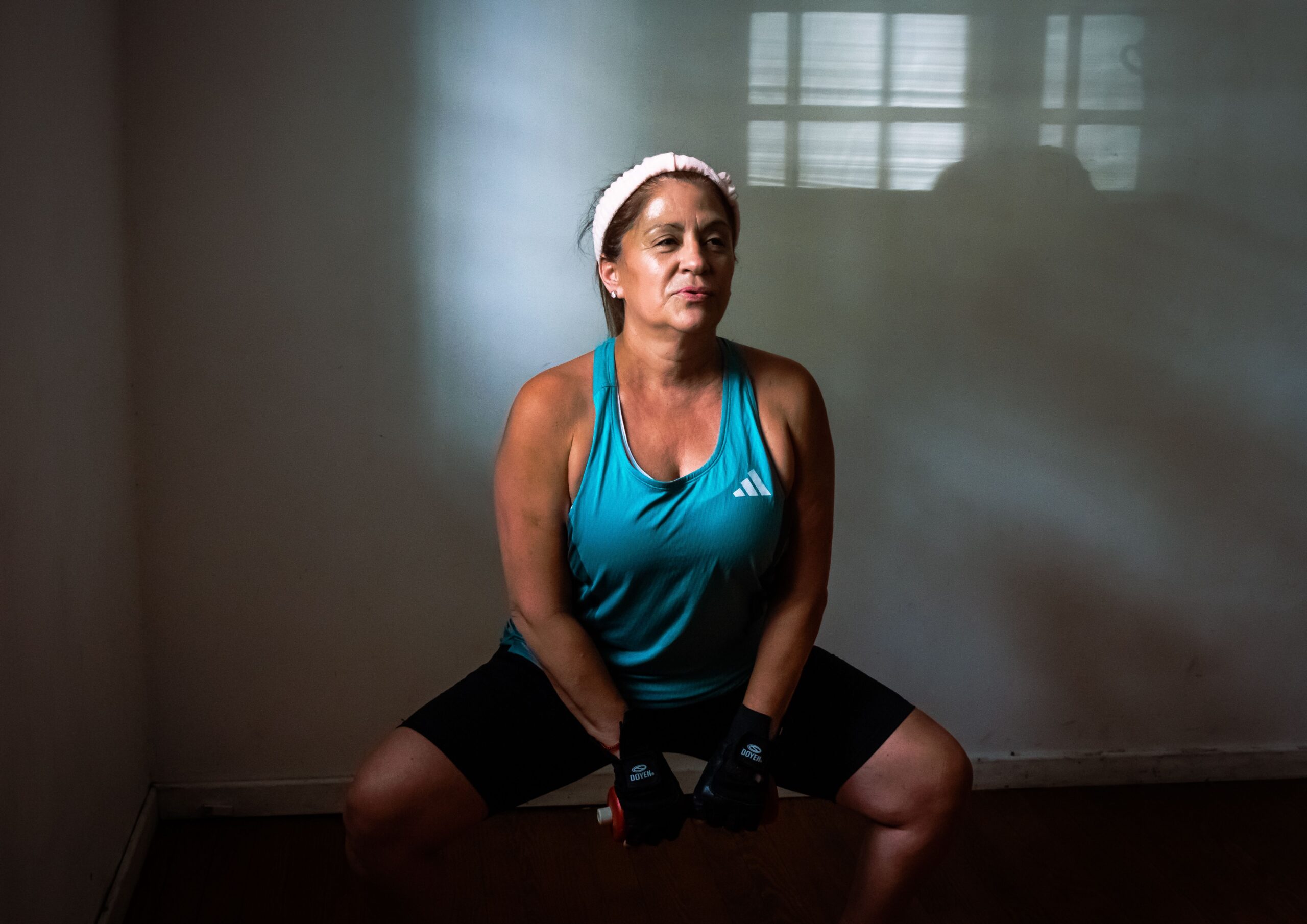
Pulling from the same 101-trial meta-analysis above, here’s how the three approaches compared on specific outcomes in postmenopausal women:
- Fat mass loss: Aerobic (−1.94 kg) outperformed the overall average (−1.27 kg), which outperformed resistance alone (−0.45 kg, not statistically significant)
- Lean/fat-free mass gain: Resistance training (+0.90 kg) outperformed combined training (+0.68 kg)
- Waist circumference: Aerobic training significantly reduced it; resistance training alone did not show a significant reduction
- Visceral fat: Exercise overall reduced visceral fat, but there weren’t enough studies isolating resistance training specifically to know how much of that credit belongs to resistance training versus aerobic or combined approaches — a genuine gap in the current evidence, not a confirmed resistance-specific benefit
If you only have time for one type of exercise and fat loss is the priority, the evidence leans toward aerobic activity. If you’re building a complete program, combining both — which is what most public health guidelines already recommend — gives you the broadest set of benefits.
How Much Strength Training You Actually Need
The good news: the evidence-based bar is lower than the fitness industry often implies. The CDC recommends at least two days per week of muscle-strengthening activity covering all major muscle groups (legs, hips, back, abdomen, chest, shoulders, and arms) — the same baseline recommendation for adults of all ages, including older adults.
For people newer to strength training, a commonly cited starting protocol is 40–50% of your one-rep max for 10–20 reps per set, progressing over time. As strength and comfort build, general guidelines for healthy adults suggest 2–4 sets per muscle group, roughly 60–80% of one-rep max, 8–12 reps per set, with 2–3 minutes of rest between sets and 48–72 hours of recovery before working the same muscle group again.
Mayo Clinic offers a simpler starting framework for beginners: two or more sessions a week, about 20–30 minutes each, using a weight that tires the target muscle by around 12–15 repetitions. One set per exercise is enough to start seeing benefits — you don’t need an elaborate multi-set program on day one.
The “Bulky” Myth, Debunked
A common reason women avoid strength training is the fear of “getting bulky.” The physiology doesn’t support that fear. Testosterone — the primary hormone driving significant muscle hypertrophy — circulates at roughly 15–20 times lower levels in women than in men, according to research published in Endocrine Reviews. This large hormonal gap is a major reason men typically carry significantly more muscle mass than women at similar body weights and training levels.
A 2025 systematic review and Bayesian meta-analysis of 29 studies, covering more than 2,800 men and women, found that the relative (percentage) muscle growth response to resistance training was statistically similar between men and women — women’s muscles respond to training with comparable proportional growth. Men’s absolute muscle gains were somewhat larger, but that mostly reflects their larger starting muscle mass, not a superior growth capacity. Visible “bulk” in women who lift typically requires years of deliberate high-volume training paired with a calorie surplus — not the kind of twice-weekly strength routine recommended for general health.
Caveat: that hypertrophy study was conducted in younger adults (ages 19–42), not specifically postmenopausal women, so it’s a reasonable extrapolation of the underlying physiology rather than direct evidence in an over-50 population. Still, there’s no physiological mechanism suggesting the pattern would reverse with age — if anything, naturally declining testosterone after menopause makes unwanted bulk even less likely.
A Bone Health Bonus Worth Mentioning
While this article focuses on fat loss and body composition, it’s worth noting that strength training’s clearest, best-established benefit for midlife women may actually be bone health. The LIFTMOR randomized controlled trial tested high-intensity resistance and impact training in 101 postmenopausal women with low bone mass over eight months. The training group saw lumbar spine bone density increase by 2.9%, compared to a 1.2% decrease in the control group — a meaningful, statistically significant difference, achieved safely with only one minor adverse event and no fractures. A broader meta-analysis of 80 studies and over 5,500 postmenopausal women confirmed smaller-to-moderate but consistent bone density improvements from resistance training across the spine, hip, and femoral neck.
If fat loss numbers on the scale don’t move as fast as you’d like, this is a genuine, well-documented reason to keep lifting anyway.
Expert Tips
- Pair resistance training with aerobic activity rather than choosing one over the other — the evidence supports combined training for the broadest set of benefits, including both fat loss and muscle preservation.
- Don’t chase soreness. Progressive, consistent training beats occasional brutal sessions. The ACSM’s updated guidance emphasizes that training to failure and complex programming aren’t necessary for general health benefits — consistency matters more than intensity extremes.
- Prioritize protein alongside training. NAMS guidance suggests roughly 1.2 grams of protein per kilogram of body weight per day to help support muscle maintenance during midlife.
- Give it more than a few weeks. The postmenopausal women in the BMC Women’s Health study didn’t show measurable body composition changes until well past the point many people give up on a new routine — patience is part of the evidence-based approach here.
- Track more than the scale. Waist circumference, how your clothes fit, and strength gains (how much you can lift, how easily you climb stairs) often shift before — or instead of — the number on the scale.
Common Mistakes
- Expecting resistance training alone to produce dramatic fat loss. The research shows this is more realistically the job of aerobic exercise or a combined approach.
- Skipping strength training because “cardio burns more calories.” True for fat loss specifically, but strength training offers muscle and bone benefits aerobic exercise doesn’t replicate — the two aren’t competitors, they’re complementary.
- Starting too heavy, too fast. Beginner protocols intentionally start light (40–50% of one-rep max) and build gradually; this is not a step to skip in the name of faster results.
- Avoiding weights out of fear of bulking up. As covered above, this fear isn’t well supported by the hormonal or research evidence for women at typical training volumes.
- Giving up after a few weeks with no visible change. Some studies show measurable postmenopausal body composition changes take longer to appear than in younger women — that’s a reason for patience, not a sign it isn’t working.
Frequently Asked Questions
Will strength training alone help me lose fat?
The strongest evidence suggests resistance training alone has a smaller, often non-statistically-significant effect on fat mass compared to aerobic exercise. It’s more reliably effective for preserving and building muscle. For fat loss specifically, aerobic exercise or a combination of both tends to perform better in research.
How many days a week should I strength train?
The CDC recommends a minimum of two days per week covering all major muscle groups. This is the baseline for general health benefits — more advanced programs may involve more frequent, targeted sessions, but two sessions is a legitimate, evidence-supported starting point.
Will lifting weights make me bulky?
This is very unlikely at typical training volumes. Women’s naturally low testosterone levels compared to men make significant muscle bulk difficult to achieve without a deliberate high-volume program and calorie surplus specifically designed to build size.
Is strength training still worth it if fat loss is my main goal?
Yes — but pair it with aerobic activity rather than relying on it alone for fat loss. Strength training brings substantial benefits beyond the scale, including bone density protection and muscle preservation, both especially important after 50.
How long before I see results?
Some studies show measurable changes in as little as several weeks in younger women, but the research in postmenopausal women suggests results may take longer to appear — potentially several months of consistent training. Non-scale markers like strength gains often show up before visible body composition changes.
Key Takeaways
Strength training after 50 is genuinely valuable — for muscle preservation, bone density, and long-term functional strength — but the research doesn’t strongly support it as a standalone fat-loss tool. The most consistent findings across large studies point to aerobic exercise as more effective for fat loss specifically, with combined training offering the best of both worlds. A realistic, evidence-based approach uses both: strength training at least twice weekly to protect muscle and bone, paired with regular aerobic activity to support fat loss goals.
Medical Disclaimer: This article is for informational purposes only and is not a substitute for professional medical advice. Consult your healthcare provider before starting any new exercise program, especially if you have existing health conditions, joint issues, or osteoporosis.
Enjoyed this article? Subscribe to our newsletter for more evidence-based health guidance for women 40+.
Sources
- Wang Z, et al. “Specific metabolic rates of major organs and tissues across adulthood.” American Journal of Clinical Nutrition, 2010.
- Mayo Clinic, “Strength training: Get stronger, leaner, healthier”
- Harvard Health, “Add strength training to your fitness plan”
- National Institute on Aging, “How Can Strength Training Build Healthier Bodies as We Age?”
- NIH News in Health, “Slowing Sarcopenia” (2025)
- The Menopause Society (NAMS), MenoNote: Weight Gain
- The Menopause Society press release on sarcopenia biomarker research
- Frontiers in Endocrinology, systematic review/meta-analysis of 101 RCTs in postmenopausal women (2023)
- BMC Women’s Health, 20-week resistance training trial
- Aging Clinical and Experimental Research, meta-analysis of resistance training in women 50-80 (2021)
- CDC, Physical Activity Guidelines for Adults and Older Adults
- ACSM resistance training guidelines
- Handelsman DJ, et al. “Circulating Testosterone as the Hormonal Basis of Sex Differences in Athletic Performance.” Endocrine Reviews, 2018.
- PeerJ, systematic review and Bayesian meta-analysis of sex differences in muscle hypertrophy (2025)
- Watson SL, et al. LIFTMOR trial. Journal of Bone and Mineral Research, 2018.
- Meta-analysis of bone mineral density and exercise in postmenopausal women