
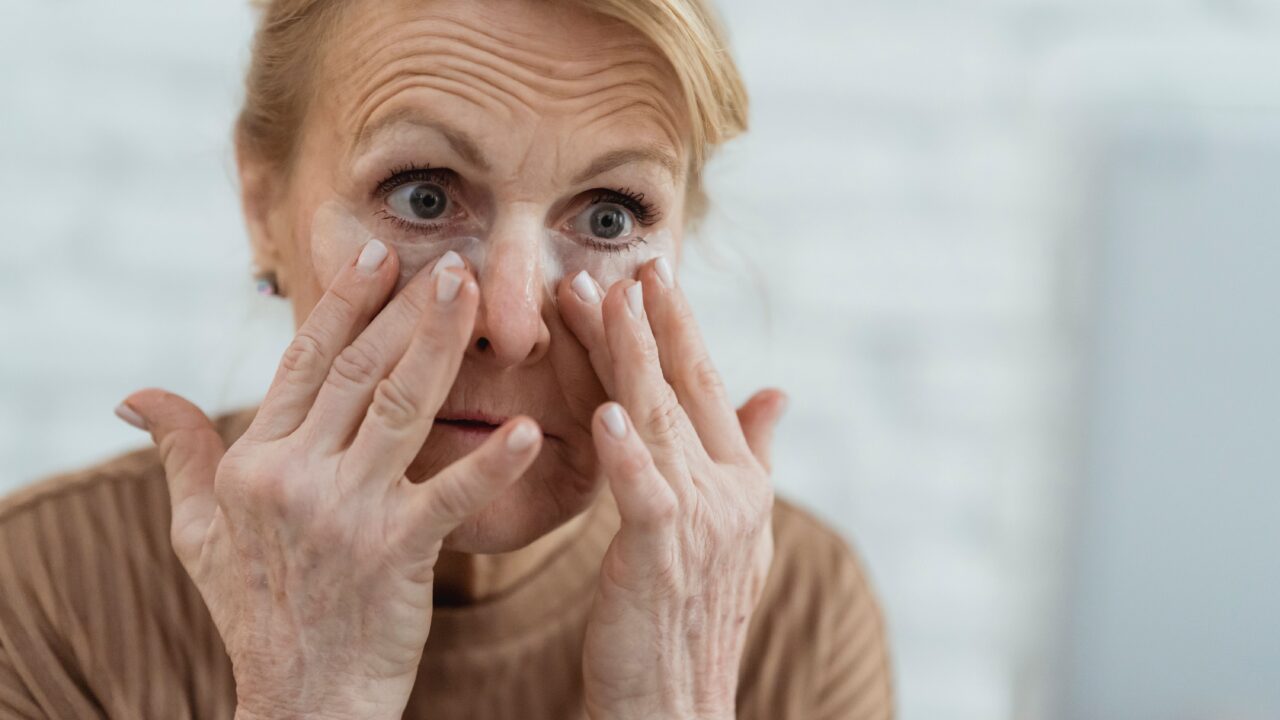
Somewhere in your 40s or 50s, skin that used to bounce back starts doing something different — a little thinner, a little drier, slower to recover from a bad night’s sleep. Some of that is time. Most of the visible part is something else entirely, and it happens to be the part you have the most control over. Here is what is actually happening beneath the surface, what the research supports for slowing visible change, and where popular skincare marketing gets ahead of the evidence.
In This Article
- What’s Actually Changing in Your Skin
- The Menopause Connection
- The Single Biggest Factor: Sun Exposure
- What Actually Works, By the Evidence
- Collagen Supplements: The Honest Verdict
- Diet and Skin: What’s Proven, What’s Plausible
- When to See a Dermatologist
- A Realistic Routine
- Expert Tips
- Common Mistakes to Avoid
- Frequently Asked Questions
- Key Takeaways
What’s Actually Changing in Your Skin
The National Institute on Aging describes several concurrent changes as skin ages: the outer layer gets thinner, paler, and less elastic, while the loss of elastic fibers (elastin) and collagen causes skin to look older, develop wrinkles, and become more fragile. Oil and sweat gland output also declines, which is part of why skin gets drier with age. Blood vessels near the surface become more fragile too, which is why bruising gets easier and takes longer to fade.
None of this is a malfunction. It is the expected trajectory of skin structure over decades, and it happens at different rates for different people depending on genetics, sun exposure, and health habits — which is the point of the sections below.
The Menopause Connection
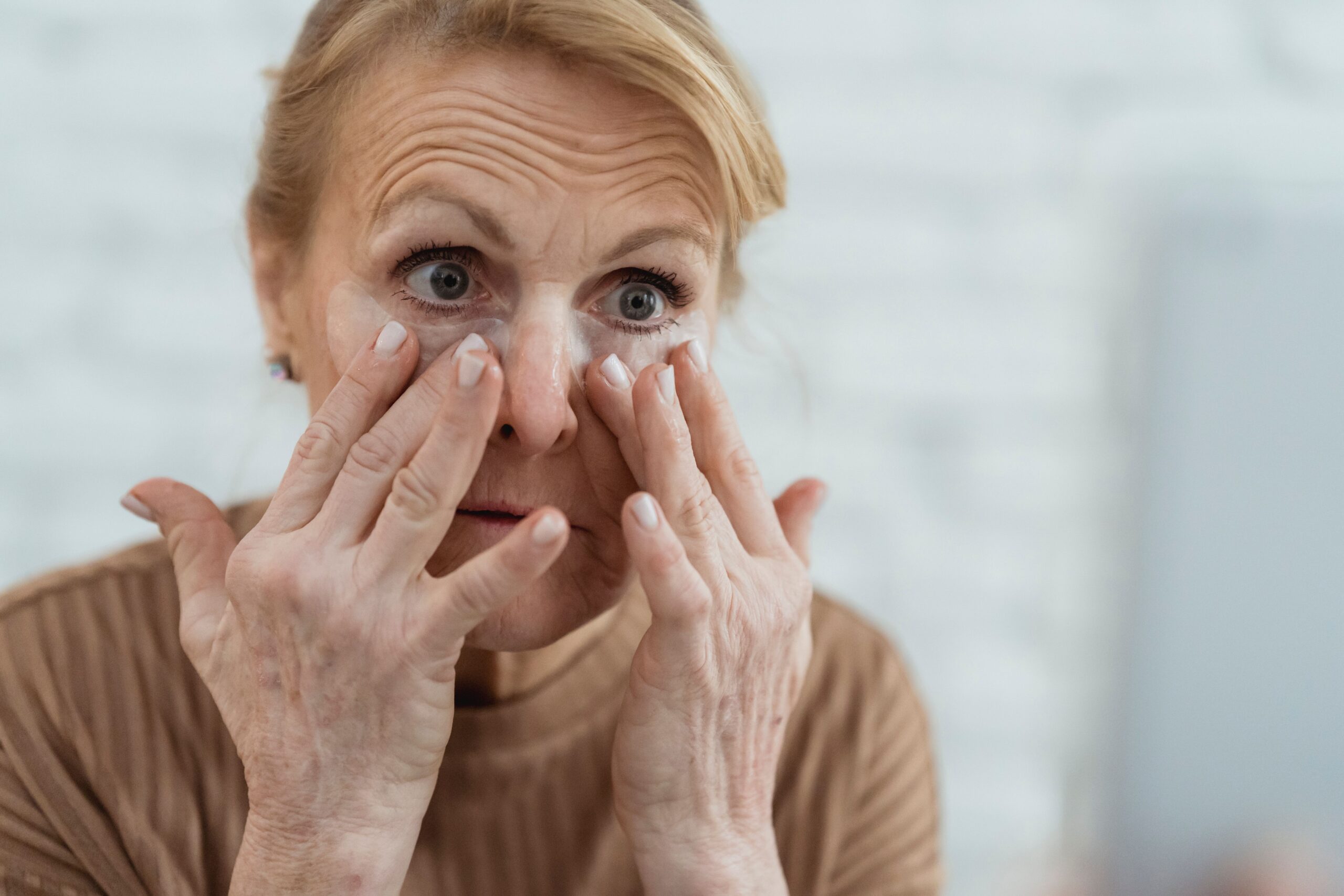
For women, the menopause transition adds a distinct layer on top of ordinary skin aging. DermNet, a peer-reviewed dermatology reference, describes a rapid loss of collagen in the first five years of menopause — faster than the gradual decline that happens before and after that window. NIA confirms the same direction: hormonal changes like those in menopause can make skin thinner and drier.
The mechanism traces to declining estrogen, which affects oil gland output, the skin’s water-holding capacity, and collagen production together. The honest summary: if your skin feels like it changed faster in your late 40s or early 50s than it did in your 30s, that lines up with what the research describes — it is not just ordinary aging accelerating on its own, but a hormonally-driven shift layered on top of it.
One caveat worth being direct about: a specific figure sometimes quoted online — that women lose up to 30% of skin collagen in the first five years after menopause — traces to a single 1999 study and could not be independently confirmed for this article. Treat the general direction (faster collagen loss in early menopause) as well-supported, and treat any precise percentage you see quoted elsewhere with some skepticism unless it is sourced.
The Single Biggest Factor: Sun Exposure
Here is the finding that reframes almost everything else in this article: dermatology sources widely estimate that the large majority of visible skin aging — commonly cited as around 90% — comes from cumulative sun exposure (photoaging), not from time alone. The American Academy of Dermatology (AAD) does not give a hard percentage but is direct that sun exposure plays the major role in prematurely aging skin, well beyond intrinsic, purely time-based change.
This is genuinely good news, because it means the single largest driver of visible skin aging is modifiable, not fixed. It is also why two people of the same age can look meaningfully different depending on decades of sun habits, independent of genetics or skincare routine.

The best direct evidence for this comes from a randomized controlled trial published in Annals of Internal Medicine: 903 adults were randomized to either daily broad-spectrum SPF 15 sunscreen or their usual discretionary use, and followed for 4.5 years. Skin aging progression was 24% lower in the daily-sunscreen group. This is one of the few skin-aging interventions with genuine randomized trial evidence behind it, not just observational association.
What Actually Works, By the Evidence
Not every skincare claim carries the same weight of evidence. Here is a hierarchy, from strongest to weakest:
Daily Sunscreen — Strongest Evidence
Backed by the randomized trial above. AAD recommends broad-spectrum, SPF 30 or higher, water-resistant sunscreen used daily, not just on sunny days or at the beach.
Prescription Retinoids — Strong Evidence
Tretinoin and other prescription retinoids have consistent backing across systematic reviews and meta-analyses of randomized trials for reducing photodamage and fine wrinkles. They work by speeding surface cell turnover and boosting collagen production. It is worth distinguishing prescription-strength retinoids from over-the-counter retinol, which is a weaker derivative with meaningfully less direct trial evidence — helpful, but not equivalent.
Topical Vitamin C — Moderate Evidence
A systematic review of 20 randomized trials found topical vitamin C improves photoaging through antioxidant effects and supports collagen synthesis. The caveat: effectiveness is highly formulation-dependent (it needs to be a stabilized, appropriately acidic form, often paired with vitamin E and ferulic acid), and a number of the supporting trials were industry-sponsored or open-label, which is a real limitation on how confidently to interpret the size of the effect.
Moisturizers with Ceramides or Hyaluronic Acid — Well-Established for Comfort, Not for Reversal
Both NIA and AAD endorse daily moisturizer for reducing dryness and improving skin’s appearance and comfort. This is well-established for symptom relief and barrier function. It is weaker evidence specifically for reversing wrinkles — think of moisturizer as improving how skin looks and feels day to day, not as an anti-aging treatment in the same category as sunscreen or retinoids.
Collagen Supplements: The Honest Verdict
Oral collagen supplements are one of the most heavily marketed categories in this space, and the evidence is genuinely in-between — better than nothing, weaker than the marketing implies.
A 2023 systematic review and meta-analysis in the journal Nutrients, covering 26 randomized controlled trials and 1,721 participants, found statistically significant improvements in skin hydration and elasticity compared with placebo. That is a real, positive signal. But the same review flagged meaningful limitations in the underlying trials: several had risk-of-bias concerns, most trial durations were short (2 to 12 weeks), and most studies were funded by collagen manufacturers — a conflict of interest that tends to inflate reported benefits. The authors’ own conclusion called for larger, more rigorous trials to confirm the findings.
The fair summary: collagen supplements have preliminary, plausible support for modest hydration and elasticity benefits, not the dramatic transformation implied by marketing, and the evidence base still needs stronger, independent confirmation.
Diet and Skin: What’s Proven, What’s Plausible
The biochemistry behind diet affecting skin aging is credible: high blood sugar can contribute to a process called glycation, where sugar molecules bind to collagen and stiffen it, and this mechanism is well understood at the laboratory level. What is less settled is how much this translates into visible skin aging differences from diet alone in real-world humans, since the strongest evidence here is mechanistic and observational rather than the kind of long-term randomized trial that exists for sunscreen.
The practical takeaway: eating a diet that limits highly processed, high-sugar foods is well-supported for reasons well beyond skin — cardiovascular health, metabolic health, and more, covered in our Mediterranean nutrition guide. Treat any specific skin benefit as a plausible bonus of an already-good eating pattern rather than a stand-alone, proven skin treatment.
When to See a Dermatologist
Most changes covered in this article are cosmetic and non-urgent. Some changes are not, and AAD’s ABCDE framework is the standard tool for evaluating a mole or spot that might need medical attention:
- Asymmetry — one half doesn’t match the other.
- Border — edges are irregular, ragged, or blurred.
- Color — uneven color, or multiple colors within one spot.
- Diameter — larger than about 6mm (roughly the size of a pencil eraser).
- Evolving — any change in size, shape, color, or new symptoms like itching or bleeding.
Any new spot, a spot that looks different from your others, or one that is changing, itching, or bleeding is worth a dermatologist visit regardless of how it scores on the ABCDE checklist.

A Realistic Routine
None of this requires a ten-step regimen. A routine grounded in the strongest evidence looks like:
Every morning: broad-spectrum SPF 30+ sunscreen, applied as the last step, even on cloudy days and even if you are mostly indoors near windows.
Most evenings: a moisturizer suited to your skin, and — if your skin tolerates it and you want it — a prescription retinoid or vitamin C serum, introduced one at a time so you can tell what is working and what is irritating.
Ongoing: an annual skin check with a dermatologist, especially if you have a personal or family history of skin cancer, and prompt attention to any new or changing spot rather than waiting for the annual visit.
Expert Tips
- Sunscreen is the single highest-leverage step. If you only adopt one thing from this article, daily broad-spectrum SPF has the strongest trial evidence behind it of everything discussed here.
- Introduce actives one at a time. Adding retinoid, vitamin C, and a new moisturizer simultaneously makes it impossible to tell what is helping and what is causing irritation.
- Match retinoid strength to your skin’s tolerance. Prescription retinoids have the strongest evidence but also the most potential for irritation — starting low and slow prevents most of the common problems.
- Treat collagen supplements as a maybe, not a must. The evidence is real but preliminary; reasonable to try, unreasonable to expect dramatic results.
- Don’t skip the dermatologist visit for the sake of the skincare routine. A yearly skin check catches the things a serum never will.
Common Mistakes to Avoid
- Treating sunscreen as optional on cloudy or cool days. UV exposure isn’t dependent on visible sun or temperature, and the daily-use trial’s 24% benefit came from consistent, everyday use — not occasional application.
- Expecting OTC retinol to perform like prescription tretinoin. They are related but meaningfully different in strength and evidence base.
- Buying into “reverses aging at the cellular level” marketing claims. Regulators have taken action against specific products making exactly this kind of unsupported claim; treat it as a red flag rather than a selling point.
- Assuming a single “superfood” will meaningfully change how your skin ages. “Superfood” isn’t a scientific or regulatory category — individual nutrients matter as part of an overall diet pattern, not as isolated miracle foods.
- Ignoring a new or changing mole because it “probably isn’t anything.” The ABCDE checklist exists precisely because that assumption is sometimes wrong, and early evaluation is when it matters most.
Frequently Asked Questions
Does menopause really speed up skin aging?
The direction is well-supported: dermatology sources describe a period of faster collagen loss in the first several years of menopause, tied to declining estrogen’s effect on oil production, moisture retention, and collagen synthesis together. Specific percentage figures you may see quoted online are harder to independently verify — treat the general pattern as real and any precise number with some caution.
Is sunscreen really that much more important than everything else?
Among everything covered in this article, sunscreen has the strongest direct trial evidence — a randomized controlled trial found 24% less skin aging progression over 4.5 years with daily use. Photoaging from cumulative sun exposure is also widely considered the largest single driver of visible skin aging, well ahead of time-based aging alone.
Are collagen supplements worth taking?
The evidence is genuinely preliminary but not nothing — a meta-analysis of 26 randomized trials found real improvements in hydration and elasticity, though the trials had real limitations, including short duration and industry funding. Reasonable to try as a complement to sunscreen and retinoids, not as a replacement for them.
What’s the difference between retinol and retinoid/tretinoin?
Retinol is an over-the-counter, lower-strength derivative available without a prescription. Prescription retinoids like tretinoin are stronger and have more direct randomized-trial evidence behind their effects on photodamage and wrinkles. Both work through a similar mechanism; the prescription version is simply more potent and more thoroughly studied.
How often should I see a dermatologist for a skin check?
Annually is the general guidance, more often if you have a personal or family history of skin cancer or notice a new or changing spot in between visits. Don’t wait for a scheduled appointment if something meets the ABCDE warning signs.
Key Takeaways
- Skin thins, loses elasticity, and produces less oil with age — normal, expected structural changes described by NIA.
- Menopause adds a distinct, faster phase of collagen loss in its first several years, driven by declining estrogen.
- Sun exposure, not time alone, is widely considered the largest driver of visible skin aging — a randomized trial found daily sunscreen reduced skin aging progression by 24% over 4.5 years.
- Prescription retinoids and topical vitamin C both have real randomized-trial support; over-the-counter retinol is weaker but still useful.
- Collagen supplements show real but preliminary benefits for hydration and elasticity — promising, not proven at the level marketing often implies.
- The ABCDE checklist (asymmetry, border, color, diameter, evolving) is the standard tool for knowing when a spot needs a dermatologist’s attention.
This article is educational and does not diagnose or treat any condition. Talk with a qualified healthcare professional before using prescription weight-loss medications, starting supplements, or making major health changes.
Sources
- National Institute on Aging — Skin Care and Aging
- DermNet NZ — Menopause and the Skin
- American Academy of Dermatology — 11 Ways to Reduce Premature Skin Aging
- American Academy of Dermatology — Retinoid or Retinol?
- American Academy of Dermatology — ABCDEs of Melanoma
- Hughes et al., Annals of Internal Medicine, 2013 — Sunscreen and Prevention of Skin Aging: A Randomized Trial
- Journal of Clinical and Aesthetic Dermatology — Clinical Applications of Vitamin C in Dermatology: A Systematic Review
- Nutrients, 2023 — Effects of Oral Collagen for Skin Anti-Aging: A Systematic Review and Meta-Analysis
- Skin Cancer Foundation — Photoaging: What You Need to Know
For evidence-aware health trend checks, subscribe to the Best Health Secret newsletter.