
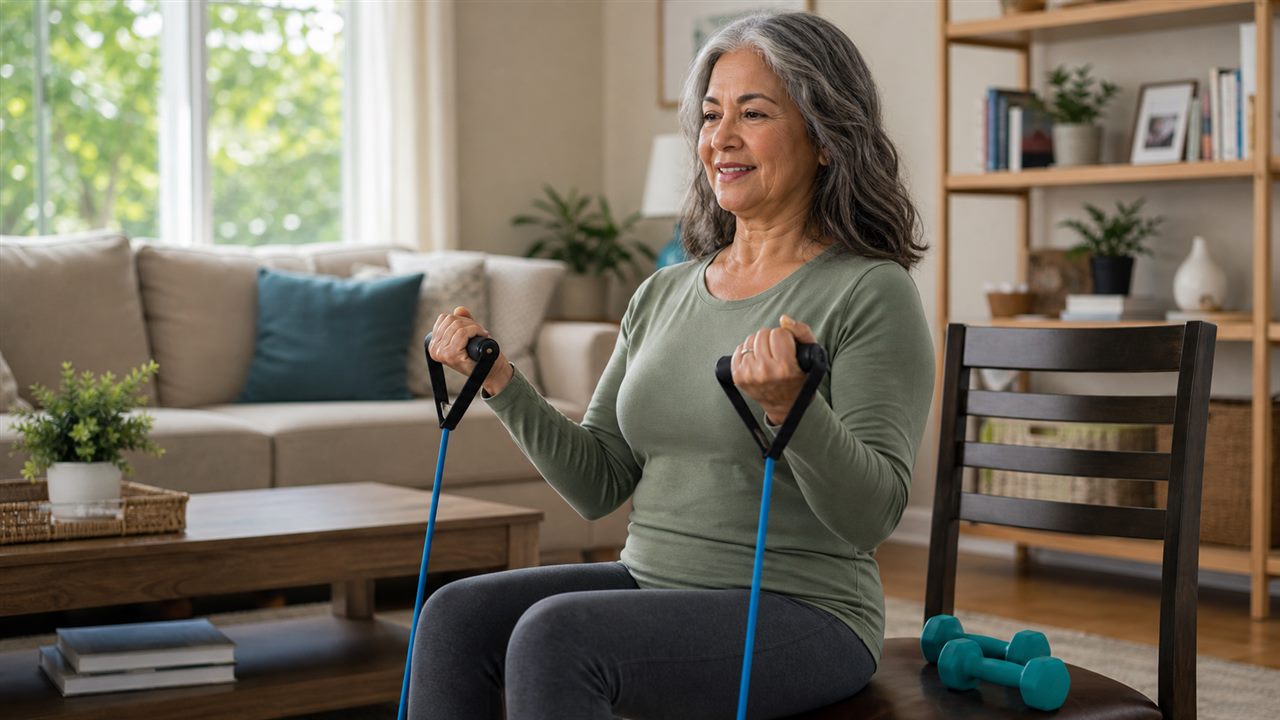
Strength training after 50 is one of the most useful healthy aging habits for women. It helps protect muscle, bones, balance, posture, joint support, blood sugar, and everyday function. You do not need to become a gym person to benefit.
Beginner strength training can happen at home with a chair, wall, resistance band, light dumbbells, or your own body weight. The goal is safe progressive challenge: gradually asking your muscles to do a little more than they are used to.
Why strength training matters after 50
- Muscle: Helps preserve strength for stairs, groceries, travel, and caregiving.
- Bone: Weight-bearing and resistance exercise support bone health.
- Balance: Strong legs and hips reduce fall risk.
- Metabolic health: Muscle helps your body use glucose.
- Weight management: Strength training helps protect lean tissue during weight loss.
A simple beginner routine
Start with two days per week. Keep the first sessions easy enough that you finish feeling confident, not crushed.
| Exercise | What it trains | Beginner option |
|---|---|---|
| Chair squat | Legs and hips. | Sit and stand from a sturdy chair. |
| Wall pushup | Chest, shoulders, arms. | Hands on wall, body straight. |
| Band row | Upper back and posture. | Use a resistance band around a stable anchor. |
| Calf raise | Lower legs and balance. | Hold a counter for support. |
| Farmer carry | Grip, core, posture. | Carry two light bags or dumbbells. |
How hard should it feel?
For most beginners, a set should feel challenging but controlled. You should be able to keep good form and breathe. If pain is sharp, joint-focused, or unusual, stop and get guidance. Muscle effort is expected; injury pain is not.
Safety tips
- Warm up with easy walking or gentle movement.
- Use a stable chair and clear floor space.
- Move slowly enough to control the weight.
- Do not hold your breath during effort.
- Ask for guidance if you have osteoporosis, balance problems, chest pain, dizziness, recent surgery, or joint replacement concerns.
What about protein?
Strength training and protein work together. You do not have to count every gram to improve. Start by including a protein source at meals: eggs, fish, poultry, Greek yogurt, tofu, beans, lentils, cottage cheese, lean meat, or protein powder if food alone is not practical.
Common mistakes
- Starting too hard and quitting after soreness.
- Only doing tiny weights forever without progression.
- Skipping legs because upper-body exercises feel easier.
- Confusing normal muscle effort with danger.
- Ignoring pain signals that deserve assessment.
Frequently asked questions
Is it too late to start strength training after 60?
No. Many people can improve strength and function later in life. Start at your level and get professional guidance if you have medical or mobility concerns.
Do I need a gym?
No. A home routine with bands, dumbbells, a chair, and bodyweight exercises can be effective when done consistently and progressed gradually.
Related Best Health Secret guides
Sources
- CDC: Adult Physical Activity Guidelines
- NIA: Four Types of Exercise
- Mayo Clinic: Strength Training
- NIA: Staying Safe During and After Exercise
Medical disclaimer
This article is educational and does not diagnose or treat any condition. Talk with a qualified healthcare professional before starting exercise if you have chest pain, dizziness, osteoporosis, balance issues, uncontrolled blood pressure, recent surgery, or other medical concerns.
For practical movement and longevity tips, subscribe to the Best Health Secret newsletter.