
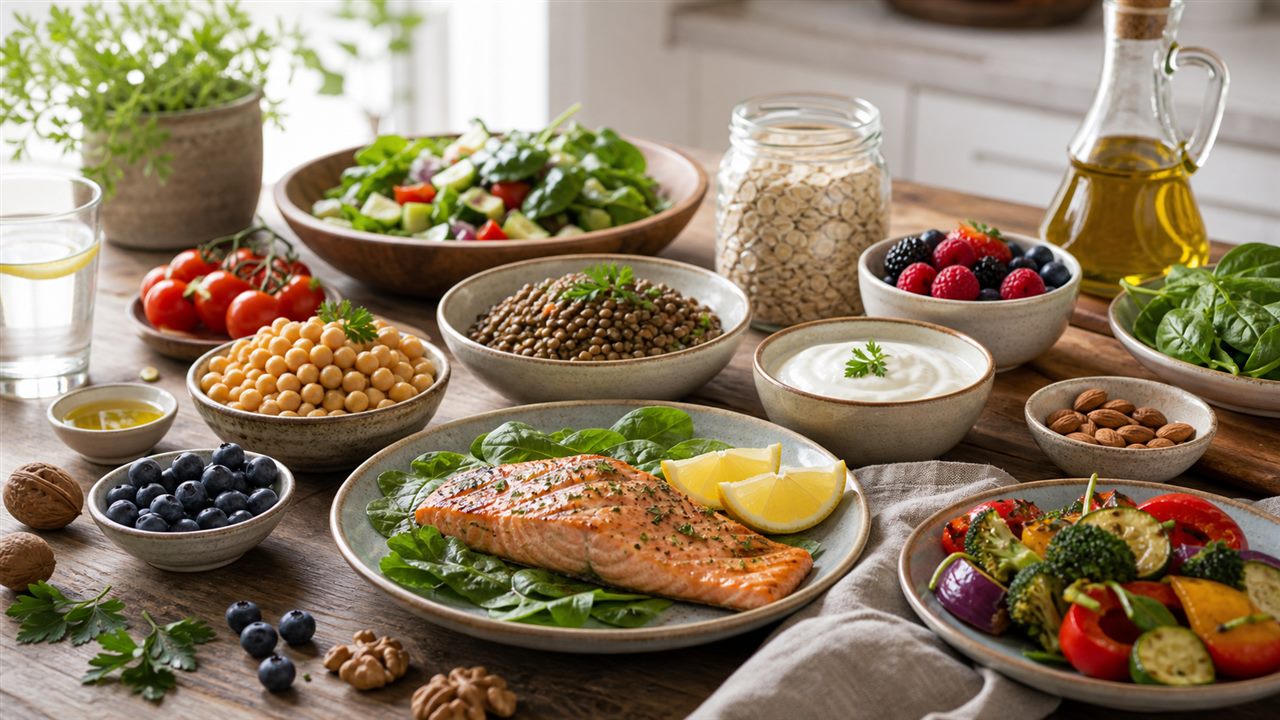
Mediterranean nutrition is one of the most practical eating patterns for healthy aging because it is flexible, food-based, and focused on long-term health instead of quick weight-loss promises. It emphasizes vegetables, fruit, beans, lentils, whole grains, nuts, seeds, fish, olive oil, herbs, and mostly minimally processed meals.
For women over 50, the best version also pays attention to protein, fiber, calcium, vitamin D, hydration, and meal satisfaction. You do not need to eat perfectly Mediterranean. You can borrow the pattern and make it fit your culture, budget, preferences, and health needs.
What does Mediterranean-style eating include?
| Food group | Examples | Why it helps |
|---|---|---|
| Vegetables and fruit | Greens, tomatoes, peppers, berries, citrus. | Fiber, potassium, antioxidants, volume. |
| Beans and lentils | Chickpeas, black beans, lentils, white beans. | Fiber, plant protein, minerals. |
| Protein foods | Fish, eggs, yogurt, poultry, tofu, beans. | Muscle, fullness, repair. |
| Healthy fats | Olive oil, nuts, seeds, avocado. | Heart-supportive fat pattern and satisfaction. |
| Whole grains | Oats, farro, brown rice, whole-grain bread. | Fiber and steady energy. |
Why this pattern supports aging well
Mediterranean-style eating supports several goals at once: heart health, blood pressure, cholesterol patterns, blood sugar, gut health, and weight management. It is also easier to maintain than restrictive plans because meals can be satisfying and social.
The pattern is not magic. It works best when paired with movement, enough sleep, smoking avoidance, alcohol moderation, and medical prevention. It also needs personalization for diabetes, kidney disease, food allergies, digestive disorders, and medication interactions.
Build a Mediterranean-style plate
- Start with plants: vegetables, fruit, beans, lentils, or whole grains.
- Add protein: fish, eggs, poultry, Greek yogurt, tofu, beans, or lentils.
- Use healthy fats: olive oil, nuts, seeds, or avocado.
- Flavor with herbs: garlic, lemon, parsley, basil, oregano, spices, vinegar.
- Keep ultra-processed foods as occasional, not automatic.
Meal ideas
- Greek yogurt with berries, oats, walnuts, and chia.
- Lentil soup with salad and olive oil vinaigrette.
- Salmon with roasted vegetables and quinoa.
- Chickpea salad with tomatoes, cucumbers, herbs, and feta.
- Eggs with spinach, beans, and whole-grain toast.
- Tofu or chicken bowl with greens, brown rice, olive oil, and lemon.
Protein and fiber after 50
Protein helps support muscle maintenance, especially when paired with resistance training. Fiber supports fullness, gut health, cholesterol, and blood sugar response. Many women do better when each meal includes both: protein plus a high-fiber plant food.
Common mistakes
- Thinking Mediterranean means pasta and bread only.
- Forgetting protein at breakfast.
- Using olive oil heavily without noticing portions.
- Adding fish but skipping vegetables and beans.
- Turning the pattern into another rigid diet.
Frequently asked questions
Is Mediterranean eating good after menopause?
It can be a strong foundation because it supports heart, metabolic, and healthy aging goals. Menopause-specific needs, such as protein, bone health, and weight changes, should still be considered.
Can you follow it on a budget?
Yes. Use beans, lentils, eggs, canned fish, frozen vegetables, oats, brown rice, cabbage, carrots, and seasonal fruit. The pattern does not require luxury foods.
Related Best Health Secret guides
Sources
- Harvard T.H. Chan School of Public Health: Mediterranean Diet
- NIA: Healthy Meal Planning Tips for Older Adults
- American Heart Association: Mediterranean Diet
- FDA: Daily Value on Nutrition Facts Labels
Medical disclaimer
This article is educational and does not diagnose or treat any condition. Ask a qualified healthcare professional or registered dietitian for individualized guidance if you have diabetes, kidney disease, digestive disease, food allergies, or medication concerns.
For realistic nutrition and longevity tips, subscribe to the Best Health Secret newsletter.