
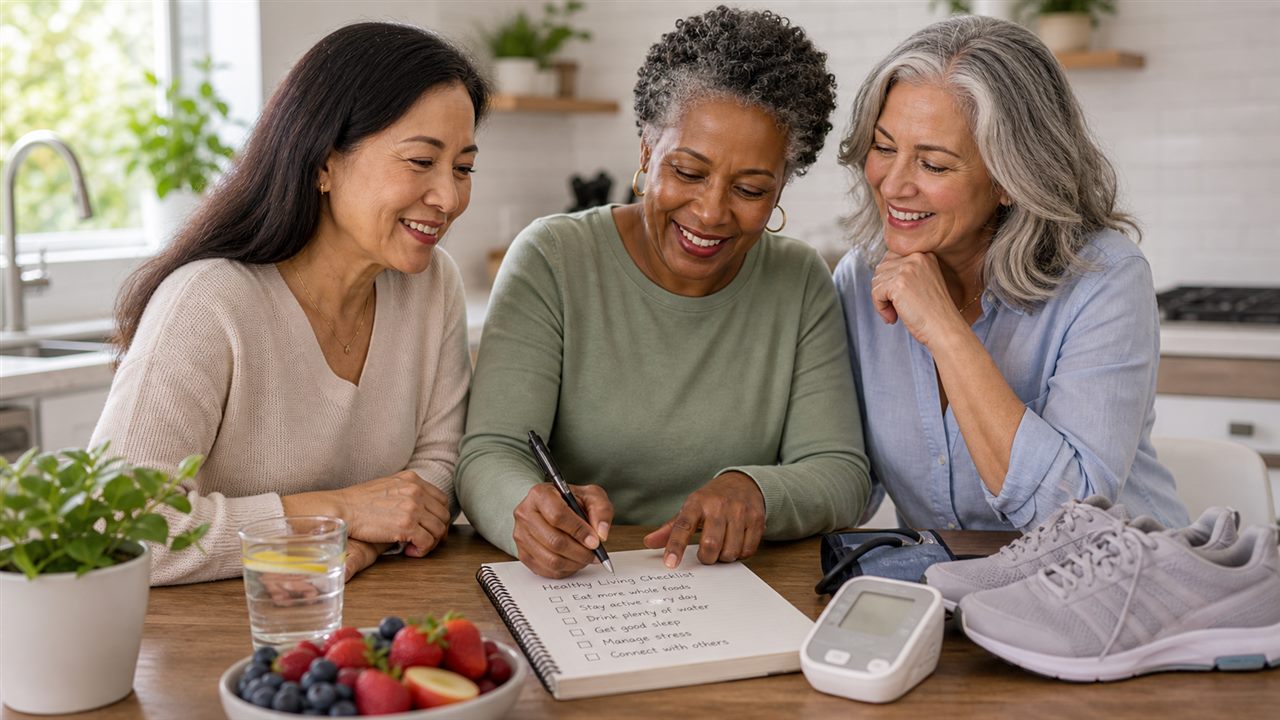
Healthy living after 50 is not about chasing perfection. It is about building a weekly rhythm that protects strength, heart health, bones, sleep, mood, and independence. The most effective plan is usually ordinary: move often, lift something safely, eat enough protein and fiber, sleep consistently, manage stress, and keep up with preventive care.
This checklist is designed for women in midlife and beyond who want practical steps without wellness hype. It does not replace medical advice, but it can help you organize the habits and health checks worth discussing with your clinician.
Table of contents
The healthy living after 50 checklist
| Area | Goal | Simple starting point |
|---|---|---|
| Movement | Aerobic activity plus strength training. | Walk most days and strength train twice weekly. |
| Nutrition | Protein, fiber, plants, and mostly minimally processed foods. | Add protein and a high-fiber plant food to breakfast. |
| Sleep | Consistent timing and treatment for disruptive symptoms. | Keep a steady wake time and address night sweats or snoring. |
| Prevention | Know your numbers and screenings. | Track blood pressure, cholesterol, glucose, bone, and cancer screenings. |
| Stress | Lower daily nervous-system load. | Schedule one genuine recovery block each day. |
Movement: the most underrated longevity tool
The CDC recommends adults get at least 150 minutes per week of moderate-intensity aerobic activity and muscle-strengthening activity on two or more days per week. For women after 50, strength training deserves special attention because muscle supports balance, bone, blood sugar, joint function, and everyday independence.
- Walk 10 minutes after meals when possible.
- Do chair squats, wall pushups, step-ups, or resistance-band rows.
- Add balance practice near a stable surface.
- Break up sitting with two-minute movement breaks.
Nutrition: protein, fiber, and pattern matter most
A healthy eating pattern after 50 should support muscle, gut health, heart health, blood sugar, and bone health. That usually means protein at meals, high-fiber foods such as beans, lentils, vegetables, berries, oats, nuts, and seeds, plus healthy fats from foods like olive oil, fish, avocado, and nuts.
Do not let perfect diets distract you from repeatable meals. A breakfast with Greek yogurt, berries, oats, and nuts may do more for your real life than a complicated cleanse you abandon by Thursday.
Sleep: treat disruption as a health signal
Sleep problems after 50 may be related to stress, menopause symptoms, pain, medications, alcohol, caregiving, or sleep apnea. If you wake with night sweats, snore loudly, gasp during sleep, wake with headaches, or feel sleepy during the day, ask a healthcare professional whether evaluation is appropriate.
Prevention: know your numbers
Healthy living includes medical prevention. Ask your clinician which screenings and checks are right for your age and history, including blood pressure, cholesterol, blood sugar, bone density, breast cancer screening, cervical cancer screening, colorectal cancer screening, vaccines, dental health, vision, hearing, and medication review.
Common mistakes
- Waiting for motivation instead of using small routines.
- Doing cardio but skipping strength training.
- Eating too little protein while trying to lose weight.
- Ignoring sleep problems because they feel normal.
- Buying supplements before checking basic nutrition, movement, and labs.
Frequently asked questions
What is the best healthy habit after 50?
If you can only start one thing, walk regularly and add basic strength training. Movement supports heart, muscle, bone, brain, sleep, and metabolic health.
Do women over 50 need supplements?
Some women may need vitamin D, calcium, B12, protein support, or other supplements depending on diet, labs, medications, and health conditions. Supplements should fill gaps, not replace a healthy pattern.
Related Best Health Secret guides
- Longevity Habits That Actually Matter
- Mediterranean-Style Nutrition for Healthy Aging
- Strength Training After 50
- Sleep After 50
Sources
- CDC: Adult Physical Activity Guidelines
- National Institute on Aging: What Do We Know About Healthy Aging?
- American Heart Association: Life’s Essential 8
- NIA: Healthy Meal Planning Tips for Older Adults
Medical disclaimer
This article is for educational purposes only and is not a substitute for medical advice, diagnosis, or treatment. Talk with a qualified healthcare professional before changing exercise, diet, medications, or supplements, especially if you have a medical condition.
Want practical healthy living guidance without the hype? Subscribe to the Best Health Secret newsletter for evidence-aware tips on nutrition, movement, sleep, longevity, and health trends.